Connecting with your kids


 Apple Podcasts
 iHeartRadio
 Spotify
 Amazon Music
 Castro
 RSS Feed
 TuneIn
 Podchaser
 Goodpods
 Castbox
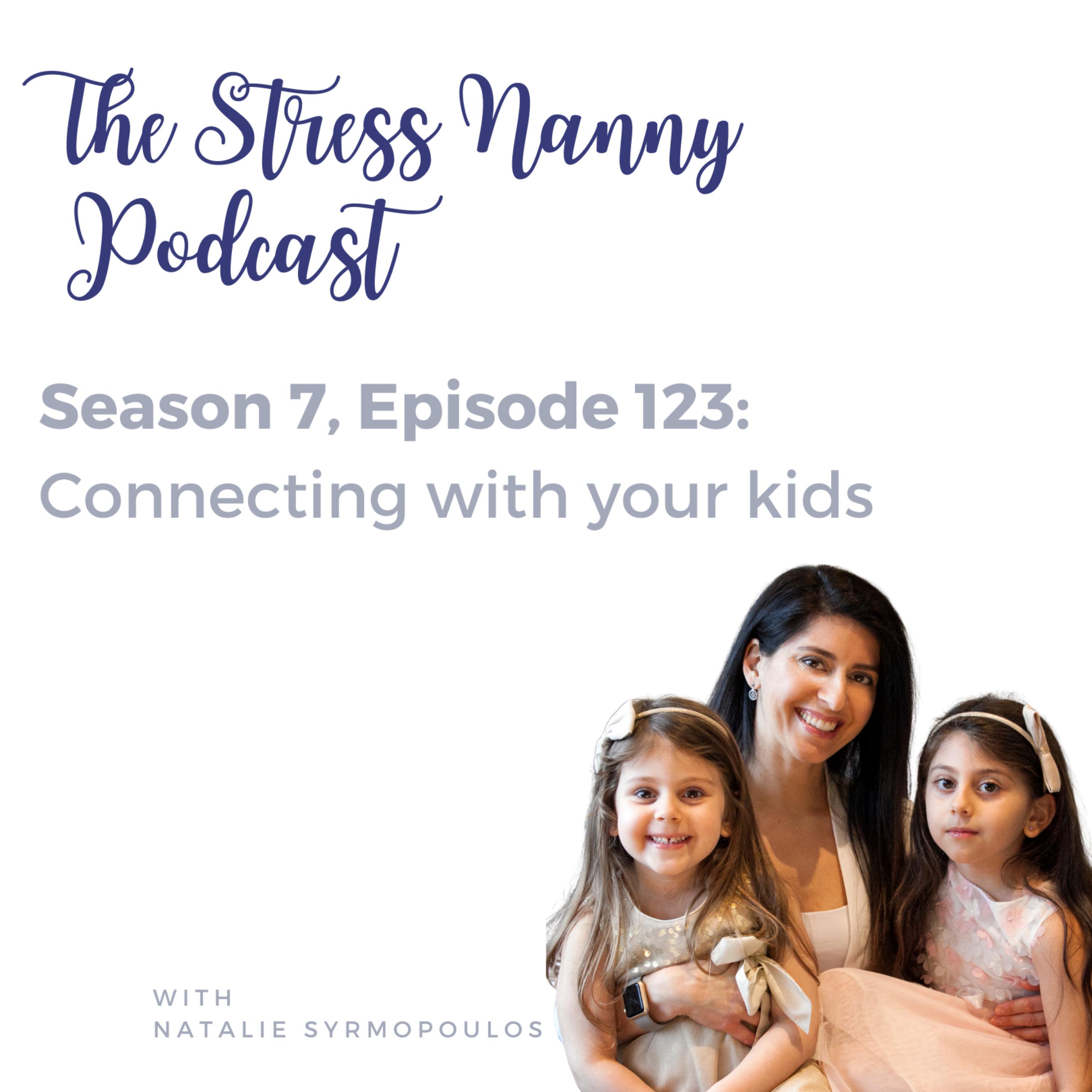
 In this episode, Connected Parenting Coach and international best-selling author Natalie Syrmopoulos talks with us about her four pillars for intentional parenting. No matter where you are on your parenting journey, her down-to-earth examples and simple action steps will help you create intentional, connected moments with your kids. With an emphasis on self-care, Natalie's perspective is always one that I love to share on the show and I'm excited to bring you this episode! Natalie mentions a special gift for guests. To access her gift go to this link and enter code VIPCANADA
Natalie Syrmopoulos is a certified parent coach, educator, international best-selling author and founder of the Evolving Summit Series which has helped thousands of families around the world. I’ve known Natalie for several years now and I have watched her change many lives with her commitment to improving family life. With a background in psychology, business, education, and empowerment coaching, she helps parents go from surviving to thriving. You can connect with Natalie in the following ways:
Website: www.evolvingwithnatalie.com
Facebook link: https://www.facebook.com/evolvingwithnatalie/
@evolvingsummitseries or @evolvingnatalie
Instragram link: https://www.instagram.com/evolvingwithnatalie/
Lindsay Miller is known for her suitcase tricks and playful laugh. When she's not playing catch with her daughter or rollerblading on local trails with her husband, you can find her using her 20+ years of child development study and mindfulness certification to dream up new ways to get kids excited about deep breathing. Having been featured on numerous podcasts, platforms and publications, Lindsay’s words of wisdom are high impact and leave a lasting impression wherever she goes. To download Lindsay’s Mindfulness At Any Age Guide click 5:92c99b91-42a7-4655-ae85-631f15636dd3" rel="noopener noreferrer" target="_blank">here. Please take a minute to rate the podcast here.
See acast.com/privacy for privacy and opt-out information.
Lindsay Miller 0:23
Hey there! This is Lindsey. I'm so glad you're here joining me on the stress nanny podcast for this conversation. My guest this week is Natalie Syrmopoulos. And I've chatted with her before if you know that episode, you know this one is chock full of parenting wisdom. Natalie has such a down to earth approach. She's in the trenches when it comes to parenting, and she knows what it's like to figure out how to care for yourself as you're caring for other little people. I hope you enjoy the conversation. And now on to the episode.
Welcome to The Stress Nanny podcast. I'm your host, Lindsay Miller. And I'm delighted that you're here today. My guest is Natalie Syrmopoulos. Natalie is a certified parent, coach, educator, International Best Selling Author and founder of the evolving Summit Series, which has helped 1000s of families around the world. I've known Natalie for several years now. And I've watched her change many lives with her commitment to improving family life. With a background in psychology, business, education, and empowerment coaching, she helps parents go from surviving to thriving. Natalie, thanks so much for being back. I'm so glad we can connect today.
Natalie Syrmopoulos 1:26
Thank you. Thanks so much. I love being here and being in your presence.
Lindsay Miller 1:31
I know I appreciate anytime we can, we can chat as well. So you and I connected on the podcast a while back. But for listeners who aren't familiar with your work, or don't know you, as well tell us a little bit about how you came to this place in your life.
Natalie Syrmopoulos 1:46
Oh, boy, we only have a certain amount of time. No, here's the short. Here's the short version of it. I entered parenting and didn't it didn't go as well as I envisioned that it would go. And I struggled. I was frustrated, overwhelmed, tired. Really super triggered almost all the time with my kids. And I have a glad one of my my eldest is a true gladiator kinjal we'll touch on a little bit. But really, when you have a super strong willed kid, and you're a super strong willed person, that doesn't always mix really well. So I struggled with that. And through a lot of personal growth through a lot of healing, and which by the way, I'm still doing both because it's ever evolving, which is why which is why I created evolving with Natalie, because it is parenting, as you know, is a journey that's never ending once you once you become a parent, you are always a parent, but their role is always shifting. And I found that through my mess, I had a message to help other parents who struggled and felt alone just like I did, when I when my girls were younger. So now I help parents through and help them go from just surviving, which is what I was doing to thriving. So now they have a family dynamic that they find enjoyable again, and that it's there that comes with more ease and with more simplicity. And that's a really beautiful place to be to actually enjoy this lifelong profession, if you will, for the rest of your life. It's it's a good place to be. So I'm thankful that I'm able to help others with that, too.
Lindsay Miller 3:47
Yeah, and I'm so grateful for your work too. Because I think like shedding light on this idea that as parents we we do evolve continuously is so important because I think we can hit those hurdles it parenting moments that feel really hard or you know, times when we just feel like we don't have the tools we need for what we're facing. And we can feel a level of deficiency around it. Like you're saying, right? And we can feel like something's wrong with me. Why don't I have this sorted everyone around me is doing this just fine. When in all actuality, like we all hit those moments at different times with different things like you're saying with different kids, right and is just like a constant process of evolution.
Natalie Syrmopoulos 4:24
Yeah, absolutely. It totally is. And I you know, I, I tell parents that it's not. Parenting is not about perfection. It's about connection and progression. And that really falls in line with evolving and parenting really is a learned skill. It truly is. And, you know, the more that you kind of dig into this and you go along this journey and you're willing and open, to look at yourself, to look at your own childhood, to look at your children, the values that you want to instill, you can really start to dig in and really help aspects flourish for your generation that weren't even accessible really in past generations. So I really do help families break cycles, because that is what parenting can be about if you're open and willing to it. Yeah,
Lindsay Miller 5:21
yeah. And you bring up the idea that there's so much more out there that we can access. And I think that that's important to recognize, because in terms of facing what we're facing today, generationally, we're navigating things that people couldn't even dream of, right. And so they're just there weren't the skills then because it wasn't even a thing. And so really needing right now to access a community a sense of support and, and go from a sense of, like, I'm so confused and overwhelmed to I'm empowered, I know what to do I know how to learn more about parenting so that I can face whatever comes my way. It's so important, right?
Natalie Syrmopoulos 5:59
Absolutely. 100%. There really is. So I mean, like there's a, there's a wonderful line between just being, again, open and willing to see what is possible for you and your family, despite what had been going on with you and your family, whether it is like from last year or yesterday, or 10 years ago, there still is an n the world is your oyster, literally, when it comes to shifting family dynamics, it really can be in the willingness to learn how to do that. If it's there, you really can shift things and literally break generational cycles. Yeah, yeah,
Lindsay Miller 6:40
it reminds me of family systems theory. So when I was in college, I studied family, marriage and family. And we talked about this idea that like, if you think of a family, kind of like a factory, right, and you're putting in certain things to the factory, and getting certain things out, if you change what you put into the factory, you dramatically change what comes out of the factory. And when we can think of our families in that way, like, you know, not in a mechanistic way, as much as just a if we're shifting as the person and we're learning new skills, and we're putting a different kind of energy into our family, we're gonna get totally different things, you know, coming out in terms of our interactions in terms of our competence of our kids. I mean, there's a whole range of, of things that change, right?
Natalie Syrmopoulos 7:21
There is any No, it's when you say that it's interesting, because there are a couple of different levels to that. So there's the conscious awareness that, okay, yes, I can, if I shift something, something, I'll get a different result, right? Different input, different results? Sure, absolutely. But here's where a lot of parents get stuck. The long term game is really to build a family dynamic that you love, and that you your kids, or you have wonderful connection with your kids. But if so, parents will do a lot of little short term things, which I help parents with all the time, I help with the short term, immediate challenges the day to day stuff. Absolutely. And there's this other level, which is like the long term, more sustainable, more deep level of re parenting yourself in many cases. Because without you can have tips and tools and strategies, no problem. And you can do those on a very conscious level. But when you're not your best self, which is often the case when you're a parent, because we're tired, overwhelmed, kids don't necessarily sleep the way they, you know, we don't have sleep the way we used to, there's a whole slew of stress on us. When we're not our optimal selves, it's very difficult for us to act on that conscious awareness of parenting differently. So then we end up going back to what I call our default parenting, which is in the subconscious, which is where our paradigms are our beliefs and how we operate. And if we don't care for ourselves in a real way, as we as we showed, as parents, which again, very difficult to do a very limited time in the day to do it. You're almost always putting your family first. So these, again, are skills that you need to learn so that you can have not only just strategies for the short term, but the long term game here, which is to have a wonderfully connected, open, trusting, loving, family dynamic. That's the that's the goal.
Lindsay Miller 9:35
Yeah, yeah. And I appreciate your bringing attention to that in terms of like, there are some strategies and things you can do in the short term that are just kind of a bandaid, like, get us through what's going on right now help us navigate these hurdles that we're facing either developmentally or relationally. You know, whatever it is, and then instead of just putting out fires for the rest of our parenting career, put some skills, tools and processes in as to where we get like a more smooth run overall.
Natalie Syrmopoulos 10:04
Yes. And that's exactly what the Empower your parenting program that I have does. That's exactly what it does this wonderful, their four pillars is this wonderful way of approaching not only parenting but life in general. But it does really help parents navigate the how, how do I do this, because that is a very confusing part for a lot of parents, you know, they they know, they want to parent differently than how they were parented, or they know how they were parenting is not working. And they want to make a change, or they're just completely frustrated and overwhelmed and not sure where to start. So this, the Empower your parenting program is really a wonderful way to start looking into that and making really big shifts in the short term and the long term. Yeah, it all starts with awareness, which I know you're a big proponent of Lindsay,
Lindsay Miller 11:04
you know, that I am. As we dive into this, I just want to circle back and highlight something you said a little bit ago, and you said, believing that it's possible. And I think as anyone who's listening right now, knowing that like just because you haven't experienced this yet, or just because you don't know anyone who lives this way, maybe or, you know, any number of reasons why you have a limited belief around this, like recognizing and maybe just in this space, when Natalie and I are chatting today opening yourself up to potential, like the possibility that this could be true for you and not discounting, you know, based on like, well, I have this kind of kid or I have, you know, these struggles, or it's never never looked that way in my house. I don't even know how to envision that. Right? Like, let's just as we get started, say, like this is you're talking to anyone, right?
Natalie Syrmopoulos 11:57
Absolutely. You can be anywhere on your parenting journey. Absolutely anywhere. And it could be and you could be the place where how I started my journey, which was I'm frustrated with my kid, you could be there. And that's fine, too. And if you're at the next kind of level with, okay, I'm frustrated, how can I make the difference internally to help make that ripple effect out? If you're there to there's always the thing is, it's life is ever evolving. It's ever dynamic. So no matter where we are, whether and I have clients who have young kids like that are three, four years old, and I have clients who have teens that are 1718 years old, the same principles still apply, they really do. So it's a wonderful way for us to kind of dive into a formula per se, but not really a formula way of being signified by these four pillars, so that you can actually do life and be like, it'd be in life in a way that empowers you.
Lindsay Miller 13:02
Yeah. Yeah. And then like, Yeah, let's go into believing that all these things are possible for you as a listener right now, like 100% accessible. Okay, so awareness. Let's go because this one's my favorite.
Natalie Syrmopoulos 13:15
Okay, good. You know, what, like, Can I can I actually see a quote that kind of ties in what you were just talking about? We're gonna say, yeah, so there is this code that you know what you know? And then you know, what you don't know, right? There are things that we know that we don't know. And then there are things that we don't know, that we don't know. Just sit with that for a moment. So we're not even aware. We're not even aware. And those are often referred to as our blind spots, or our limiting beliefs, or they're underneath our own limiting beliefs. And it's really then as you alluded to earlier, if you're open and willing to look at what could be possible for you, not from what you know, right now, but just consider there might be something in here that you didn't even know that you didn't know. And that does lead to awareness and deepening your awareness. Because at first level awareness is I don't know this, so I want to learn this. But then, what did you not even know that you didn't know? Yeah,
Lindsay Miller 14:27
yeah, that's powerful. And again, like you're saying, from us, like a subconscious play, sometimes we, we count ourselves out, right? And we tell ourselves, it's not accessible to me. So it's not even worth learning it and it's I can't you know, like, I can't even envision it. So yeah, giving giving it that parameter. Like you don't even know that you don't know this yet. So we'll just open open up and see what lands with
Natalie Syrmopoulos 14:50
you. Absolutely.
Lindsay Miller 14:54
Okay, so awareness is the first pillar.
Natalie Syrmopoulos 14:57
Yes, awareness is the first pillar so when we are willing to look at what's happening and the way and so the way to tap kind of into this, if you're kind of sitting here and going well, how do I know what? I don't know that? I don't know? wondering that, here is one way to do it. listen in on your internal dialogue. And if you're sitting there wondering what is my internal dialogue, that's part of it, the one that just said what. But it's also kind of like the every day, murmur or dialogue that's happening in your mind that you've normalized this, that's just how I think that's just how I think. And it could be something as simple as my kid is always forgetting their homework, or, you know, man, it's so hard to, to figure out dinner, when we're coming back. So late from the end, these things are real things, I'm not discounting that at all, they are very real. And again, these are the short term things that I can work with clients to help shift. And the first thing I say is, what is your inner dialogue around your everyday being. If you can get some insight on that, you can start to get tapped into your, what I call default parenting style. So it's that parenting style, it's in your subconscious. That is, was developed when you were younger, okay, and based largely on your life experiences, of course, and it's and many other things, but really, it's a way of being that you default to, especially when you are not at your best self. So if you're gonna have this awareness, while you are kind of your best alpha, or if things are mutual, if you can have this awareness of what is in my mind, what am I talking about? What am I thinking about what judgments in my putting on to my kids, myself, my, my spouse, right, a lot of these can come up. So it's just having that awareness of what is happening in your mind. And then the other way to kind of get insight on what you didn't know, that you didn't know is when you're triggered. When you are triggered by your kids, or your significant other, there are a multitude of other people. But really, it happens more significantly with our or those who we live with, really, when we can start to have a third eye view on that dynamic, we can kind of start to peel back some of the layers on why that's happening. Yeah, why is this happening? Why am I getting triggered here and you know, the the surface level, reasons could be okay, tiredness, hungry, all of these things that can contribute, you know, my kid didn't, you know, he or she had a bad day at school, or whatever the case may be, there's lots of things that can that can impede on it. But really, at the end of the day, if you can catch yourself at that moment of being triggered, and this, again, is where the awareness comes in and understanding what your inner dialogue is saying to you or to yourself. If you can start to catch that, then you can start to insert the pause. You can start to just question why this is happening. And we'll get into this a little bit more, but you can prevent yourself from reacting. That's where the default parenting comes in, when we'd have this reactionary interaction with our loved ones. So if we can get to a moment where we are aware, we can pause and then we can choose a thoughtful response. And that's like the first really foundational step of, of empowering your parenting.
Lindsay Miller 19:32
Yeah, I love that because a lot of what I noticed we were just talking about it in my mindfulness class last night is in the pause, even we can also start to beat ourselves up. Right like we can see that oh my gosh, I'm doing this again. Right and beat ourselves up. And so I love like you're saying take them minute, and then choose the skillful response, which doesn't include like piling more on yourself. More guilt, more shame, more frustration, right and like, being so gentle in the pause is important. And like you said, a lot of us, we don't have that, that sense of grace for ourselves, and we are reactive to the situations around us, but also to our own responses. And so when we can remove those default responses and realize, like, you're saying, Oh, my gosh, I first got frustrated with my kid and then got frustrated with myself for getting frustrated with my kid. And you know, it went into a cycle, you know, then we can move, move away from both of those acknowledge, you know, that that came up for us and let it be there, but not respond from either of those places. Right.
Natalie Syrmopoulos 20:45
Right. And I love that you brought that up. Because in that self awareness is Yeah, understanding. And I mentioned this before, who are you judging? Are you judging yourself to, when you are judging yourself and you're, you're putting yourself in that shame, blame. You can really, you're, here's the thing, shame and blame is like, where I like to look at it as worry. It's a busy tool that your mind uses. But I asked how productive is it or how efficient is it in helping you be your higher self, be the parent you've always wanted to be. And it's so hard, it can be very difficult when you come from a family of being people are worried all the time fear based, it's very hard to kind of pull away from that at times. But there are things you can do to shift that dynamic. And if you're if you are a coming from a family where there was a lot of guilt, or, you know, you're only accepted for certain behaviors, the acceptable behaviors or the good behaviors, again, you can really start to go down that path and that cycle of doing the same thing with your kids. And yourself. Because inherently, you only do to others what you know of yourself. So if we can start with that, and this is where self care comes in. And this is why it's so important to have that with the awareness as being able to care for yourself. Not only in the moment, because it is tough to do in those moments, we can take breaths, of course, there's things that we can do that are that will release just for that moment. But there's things outside of those moments that we really need to do as part of their self care, to give ourselves the experience that we want to give to our families.
Lindsay Miller 22:36
I love love, love the way you just put that we give ourselves the experience we want to give to our families.
Natalie Syrmopoulos 22:43
That's so powerful. And so difficult to do the
Lindsay Miller 22:50
truth is, I think a lot of times we approach it the other way, right? It's like you said, we put ourselves last and we're like, I'm going to make this amazing experience for my family, I'm gonna create this environment, like I have these dreams about how I want my family life to be. And then when I have time, I'll take good care of myself. But when all actuality it's that gentle, intentional and loving care for ourselves that allows that to like flow to those around us. Right?
Natalie Syrmopoulos 23:17
It does, yeah, and you're right, we do we and you know another way to another example of that is how we say we want to have, we really want to give our kids a different experience than what we did what we had, right. So we want to give them access to all these programs or we want to give them you know, this wonderful experience or whatever we want to be more more affectionate with them we experienced but if we don't do these things for ourselves first, I mean, we can do them with our kids. But again, it's on a very surface level. So the the, the long term foundation of building that as your go to even when you're not your best self that won't be there. If it's not if you're not doing the things to help you build that foundation, which again is through this the four steps in my empower your parenting program really helped to solidify that. But again, self care is huge. You have to have that and parents don't find the time for it but you can you can find little way I only started with five minutes date. Yeah, and I didn't even do it. Um, my my morning routine right now consists of at least an hour, sometimes an hour and a half. We get before everyone else and I do this routine, okay. However, I did not start like that. Okay. I didn't know I wanted to get every ounce of sleep that I could. And when the night before when my kids go to bed, I would want to stay up and have need time, which a lot of people think is self care, quote, unquote, but it's actually not authentic self care. And we can talk about that a little bit as well. And then I would wake up later. And then I would just try to find five minutes either while my kids were napping, or I just, you know, had set five minutes while I was kind of folding laundry to do my self care. And it did. It did start late. It didn't start out small. Yeah, right. But I just want parents to know that you don't need to be a morning person to have a self care routine to really start diving into this, you don't need to have those if you do great. It will just amplify your results it really well. That if you don't, you can start somewhere you can start with just five minutes of doing something. Yeah,
Lindsay Miller 25:47
yeah. And I'm glad you brought that up. Because I think it can be intimidating sometimes to look at someone who has an amazing self care routine. And it's like, you know, to go from zero to 60 minutes. It's hard, you know, but it's not it's incremental. And you add, and you build a new figure out what you like, and that awareness piece comes in, because you're like, oh, this was super helpful. This not so much. This is something I really want to do consistently. You know, this is something else I'll add. And so I love the way that you tie those together. But you've been so sweet to humor me on staying on awareness for so long, but let's get to that fillers. Because I know
Natalie Syrmopoulos 26:21
it's such an important part though. It really Yeah. So I mean, like, once you and this kind of ties in, you know, the second pillar is having that acceptance. And that really is it ties into the blame and the guilt. Because if you can just accept who you are, while evolving to who you like to be in the parent you've always envisioned and the family dynamic you've always wanted without shaming yourself without shaming your kids without and that's a tough thing to do. Yeah, right. But when we come to this place of acceptance, okay, I am, what I am right now. Whole but fragmented. Okay. There's, there's some things that Yeah, I do want to shift and evolve. We need to have that acceptance because we don't have the acceptance, we think something's wrong with us. And the truth is, we can always look for something wrong in everything. That's how the human brain is wired to work. It's wired to work to look for what doesn't work, look for the fear, look for the the danger. It is wired to do that. From an evolutionary standpoint, that is what our brains are meant to do to help keep us surviving. But we are not just wanting to survive anymore. We're not in caveman cavewoman world anymore, we're in a world that we can evolve our own selves and come to a place of thriving. So being able to accept ourselves as we are without shaming, blaming, or thinking something's wrong with us, and understanding the neurobiology behind that, by the way, as we just briefly touched on, can help you sit in that space of okay. And it's kind of a third eye view, just expanding the where of the awareness now that you have. How can I and this goes into third pillar? How can we acknowledge what has happened, what my part is in it, what their part could be in it. And this is a tough, I'll be honest, this is a really tough one. Because when parents, parents come to me, and they see some things, they don't always say, something's wrong with my kid. But I'd like something. Something's going on. I'd like to fix this. And when you can acknowledge your contribution to it. You know, when I say this was such love, Lindsey, because trust me, I was there. I was like, no, no, she's my daughter is the one is the issue. She's the one who is like, not listening. She's not doing what she's asked, blah, blah, blah, blah. And there are again, there are short term strategies that we can use, and I help parents with that no problem. But there's a long term piece of knowing how our part helps to create the result that we currently have. And that goes back to that analogy used about the family systems and how when we're our families are a result of what we put into them and who we are being when we're with them. So it's it's a tough one though, because and that leads to the fourth pillar which is really being accountable because one Once you can be aware, right and you're being aware, that's the first step and then you accept what is without the blame shame, then you can acknowledge, Okay, where is my part, what could be what could shift, and then you are accountable, you do the thing, you take the action to make the difference and shift so that you have a different family dynamic result. That is the a very quick review of the four pillars in the Empower your parenting program. And the cool thing is that you kind of go, although awareness is kind of the first step, you really kind of move in between the pillars. So there may be times where you just skip the acceptance, because you've learned to, I'll give you example. So today, I'd say I've been doing this work for a while today, I yelled at my office right away, forgive myself, railway repair with her, of course, right and forgive myself, then I can move on, I can move on to the next thing I can parenting is not about perfection, it's about connection and progression. Yeah, so I can now move between these pillars with agility and kind of nowhere I need to go, it doesn't mean I'm perfect. It means that I have the tools, this foundational set of tools now that I can pull out of when I need to, because the reality is, there's just way too much going on for us parents, for us to get the strategy, right, or unquote, and then think that we're done. This is a life long journey. And it's a learned skill. So the sooner you can be okay with that and be open to that you really are going to do yourself and your kids and their kids, possibly a lot like a huge favor in your community. Like the difference you're making with your kids in your family ripples out to your community to sell. It's just a beautiful way of making a difference. Yeah,
Lindsay Miller 32:14
I really appreciate the way you condensed all that. And it does seem like such a great, well, no, just that I mean, using those, those different those four different pillars, a great way to cultivate the agility we need to parent in the modern world, like you're saying, at some point, like you may need to lean on one a little bit more than another. Or you may need to be cultivating one a little more than another. But like if you can, you can get those skills in place. It's a powerful foundation to work from. Yes, and I love I love what you're saying too, about generationally making a change, because a lot of things that are current in our world right now, I think to myself, you know, even just technology different different facets of business, you and I have talked about that before to where different things you could be doing. Like it wasn't accessible before. And either I can learn it now and add it to like my family's wheelhouse of tools and skills, or I can kind of leave it off. And it's going to be something that my my child has to figure out later on her own. Right. And while it's challenging sometimes to learn these skills, like in family life, because it feels vulnerable, when we make mistakes with people we love the most that like the learning itself is the gift, right? Like those moments are the gift we give our kids because we're like, here, we're gonna get partway in this, you know, in our family, we're going to pick up some of these skills, and I'm not going to put it off so that someday, you have to sort out all of them on your own, because you're gonna have to learn plenty more when you have kids, right? But in this world, right now, I'm gonna learn everything I can and give you that, you know, give you this space to sort through your own stuff, give you as many skills and tools as I can from this emotional self awareness Parenting Place, so that I can, you know, like, improve upon the life of my grandkids.
Natalie Syrmopoulos 34:04
Yeah, yeah, absolutely. And I, you know, you know, that's if you're open and willing to do that work. Yes, there's a huge, wonderful ripple effect that will happen, okay. And, you know, I, you can start little by little, you don't have to change the entire future generation, even you just making one little difference can can really last for generations. In fact, there's studies that show that our DNA holds about four generations worth of trauma. So if you look at it, on the on the reverse, if you can say, I'm going to do this new thing, I'm going to break this cycle of parenting from guilt or parenting from fear or parenting conditionally. It If I can start to break that I don't have to be perfect at it. But even if I can just start a little bit, it's gonna last for four generations later. That's the potential of it of you making some difference. Yeah,
Lindsay Miller 35:17
yeah, I'm glad you brought up that example. It truly is in the small things, that those like massive changes happen, right. And I'm glad you pointed out that it doesn't have to be something huge that you do. But it can just be some simple things that you, you employ daily, like taking care of yourself, you know, you add that to your wheelhouse, you start to bring awareness to moments that maybe you just were on autopilot before and really reactive like, it is in those simple, simple moments, we create the space for long standing change to happen.
Natalie Syrmopoulos 35:49
Yeah, and I love what you said. So the self care that's I just let's circle back to that for a moment. Because what happens with a lot of parents and moms specifically is that they have this level of service that they want to provide to their family, okay, understandably. And here's what I say to to, to moms is, think about how you want your kids to be when they grow up, you're modeling it right now. So if you want them to be the person who puts everyone else first, including their friends, including their significant others, include, and when I say significant others, I don't mean like, I mean, think about in the teen years, think about their first, right, because before marriage, or long term religious habit, it happens in the teen years first. So think about how you want your child to be in those cities, what kind of tools you'd like them to have. And when we model, taking care of ourselves, not just ourselves, right? We take care of our families and ourselves are not mutually exclusive. You can take care of your family and take care of yourself at the same time. And if you're if you're listening and thinking, I don't have time for that, come talk to me, I will help you find time, I really will. Okay. And, and we'll be separate. But when we start to take care of ourselves, which includes building some boundaries, building healthy boundaries, which a lot of us didn't learn, never experienced, we are equipping our kids through modeling, that's the most powerful way of equipping your kid is through modeling, not telling them what to do, but to showing them what to do for taking care of yourself and taking care of your family. Putting up boundaries, healthy boundaries, through calm and collected conversations. Being able to really honor yourself, you're teaching them so when they're at when they're in high school, and they are at a party. And they're being asked to do XYZ, they can really sit there and stand in how am I honoring myself? Am I honoring myself in this moment? They don't they will think of those words. Okay, but they see, okay, Mom was asked to host dinner, that you know what she was already had a busy week, when she was asked to host dinner. And you know, what, Mom stood up for herself in a calm collected manner and say, you know, what, I'd love to and it just doesn't work for me to do that. That modeling and communicating that route gives your kids the skill set to do so, in whatever situation they're in. I know, it seems weird, you know, dinner planning dinner versus being at a party and asked to do XYZ like it is exactly the same sort of skill set that we're speaking of. So it's important to really be able to take care of yourself and build those boundaries. honor yourself while honoring your families. And that is difficult to do. That's a learned skill. Yeah, it really is. Because it is when you when you hear myself saying when I hear myself saying oh, how do you honor yourself and your kids like how there's there are ways Okay, and simply put, start with five minutes for yourself if you don't have a five minute regime on and if I can, I can share this really quickly like having three things of gratitude saying three things of gratitude. It helps to shift your reticular activation system there's like a neurobiological aspect to this I'm not really diving into okay, but there is reason for these. These these ways of doing things to care for yourself in an authentic way. So just jumping back when I used to bedtime I put the kids to bed and I would sit up watching TV late at night. If that was not authentic self care, because I was not doing something that was truly honoring myself, I was using it as a coping mechanism, which is very different from self care. But so many of us use coping mechanisms to survive, understandably. So we've just been through a pandemic, we have acquired a whole new set of mechanisms. Like, right, it's a whole new set of coping mechanisms. And now, here's another example, parents will come to me and they'll say, you know, before the pandemic, my kids weren't really on screens, but now they're on screens, or they have phones, iPhones or 1213. And they know how to take off the guidance, restrictions and all of that, like, how can I how can I go back to that, and they feel a little bit of defeat? And they tell him, of course we can, we can go back to that we can shift from a coping skill to something else, that is a healthy way of dealing with whatever we're dealing with. And it was okay to have coping mechanisms during the pandemic. That's a huge the pandemic was a huge, like, we we will be unpacking that for years. Okay. So if you had to adjust and have your kids have more screen time, that's okay. Yeah. Which one is most parents don't want to continue that. So how do we shift and then I work with parents on that, because you can, you can absolutely shift a coping mechanism back to something that is more healthy that, that, that empowers yourself that that fuels life into you. And your family.
Lindsay Miller 41:42
Yeah, yeah, that was so well said. And I think to just to touch on your one of your ending points from before that idea of taking skillful action. And like in the pandemic, that might have been skillful action, right to get you through. And then now that we're post pandemic, really looking for the tools that are skillful action for what we need right now. And recognizing that there are so many of us that use could you support us support around finding those tools, transitioning out of pandemic coping into intentional self care out of like pandemic kind of reactivity and emotional quicksand into, you know, more intentional, aware nonreactive responses, and that it's possible, right, and that it wasn't like, the ruin of the rest of your parenting career or the ruin of your kids like it was a phase. And now moving through that there is perhaps just something else you need in order to get you to where you want to be get you back to where your family was, or where you envision it. And I love, I love all that you shared in that regard today. Yeah,
Natalie Syrmopoulos 42:46
thank you for letting me share that because it's it really is, our our goals will change as parents, they will change and they will shift and I, you know, your child is now in her teens. Okay, so you know that when you are in the toddler phase, there were certain challenges and roadblocks that you felt were, you just couldn't maybe overcome, or they're hard to overcome, but then you move through that. But if you can move through that with a skill set, and with these four pillars that allow you to now also when she's 1516, and she wants to, you know, not abide by a curfew that you guys have set up, then you can use the same sort of skill set to work through that. Because parenting does evil, our goals shift. And we still have to, you know, this, this idea of, of raising kids how we want them to be it's, you know, we have to do that with a bit of distance, we really do. And we use this, you know, as a connected parenting practitioner, we use this analogy of the airplane, like flying the airplane with your kids. So when our kids are young, we are the one who are flying the plane, and our kid is in the backseat. And then as they get older in their tweens and teens, which by the way, starts as early as nine years old, okay, which I know mind blowing at times. You don't have to they don't have to have the team at the end of the number anymore. When you when that phase comes up, you're co piloting with them. And this, this involves a lot of co creation with your child, which is a lot of communication with your child. And you want to do that. Because then when you get to the teens, your child is going to be flying the plane most of the time whether or not we like it. They're going to be flying the plane most of the time and you're going to be in the backseat as a guiding, loving support. But let me tell you if you haven't established a way to To have that co creation, have that open communication, build that trust, it's going to be more difficult for both you and your team to be able to flow with life with a little bit more ease, it's going to be really rocky so So again, if you have teams, you can still do it, you just have to back, we're just gonna backtrack a little bit and make sure that we have the lines of communication setup. We have trust, we've built trust with ourselves in our kids. You know, a lot of one of my clients who's her teen, she went from him not to the pandemic had a relationship she had no idea about during the pandemic, we were all at home. And so she didn't know Right? And you know, because you can't, you don't you won't know everything. This is the thing. Yeah. He finally told her after about a year and a half. And she responded so well, she really did. But it's that, that there's that scary point where you're like, how could I under my nose under my house, and that happened, I don't even know that he was in a relationship. When he starts to get out more and more, there's less than less than I know, how do I build that trust, and the communication and that that love so that they know that you're there without controlling what they do? Because you cannot you cannot control anyone. I learned that really early, like as a gladiator. And I did, I really did like strong willed kids. If you have a strong willed kid, you will think that they're a teen at the age of three. And you know, and a lot of parents will say, well, good luck with you good luck for when she gets older. And that's what I would say to myself, and I scared myself, I'm like, if I don't figure this out now, when she is older, and I have less, quote unquote, control, which is very much an illusion, I will I will really be out of my element. Yeah. At any rate, there are no matter what stage you're at with your parenting, you can always get back to tools that you can use for the rest of your life.
Lindsay Miller 47:17
Yeah, in all your relationships, you I mean, tillers that you mentioned, like you touched on this in the beginning, they're good in all relationships, but in this most crucial one of parenting, they're especially helpful. And I love that plane analogy, too. Because given what you were just mentioning, like I want my child to want, like, even if I'm in the back of the plane later on in some of her adult years, you know, or I just want to be invited for the ride. You know, like, I just want to be around for the ride. And I think that that analogy is so beautiful, because she might ask me to, like, grab a parachute and hop out, you know, like, like, yes,
Natalie Syrmopoulos 47:52
yes. And, you know, if I may, like, you know, you're I know, you have such a wonderful relationship with your child it because you do this work, right, you do this work. But some parent parents might say, well, I, I, as an adult, I do have my parents in the back of my mind. But let me ask you, is it in the back of your mind as fear based, or as a loving support? Yeah. And there's a very, it's very hard for people to for parents to distinguish between the two. And, like, I'll have clients say to me, like, well, I want my, here's a very simple example, I want my kid to eat because, you know, I'm, I'm, I love them, and I want them to be healthy. But really underneath that they are scared. And they're working off of fear. So when we start to distinguish between love and fear, we can really start to and quite truthfully, if we're really honest with ourselves, we get to where we need a little bit of healing first, before we can approach parenting with our kids from a very neutral and honoring way of being. Yeah, yeah. So
Lindsay Miller 49:04
So well put, yes, yes. So someone's listening right now. This has been so fantastic. Thank you, again, for being here. If they're listening, and they're like, Okay, this is the kind of help I need. How can they reach out to you? How can they connect with your work?
Natalie Syrmopoulos 49:17
Yeah, absolutely. They can go on WW dot evolving with natalie.com. I'm on Instagram as well and evolving with Natalie. So feel free to reach out I'm sure you'll have show notes as well. So like they can reach out and I have a special gift for your your audience as well. So if if your community is interested in open to working through some of those deeper layers or even starting to get introduced to it, I will offer that to your community.
Lindsay Miller 49:46
Yeah, that would be great. We'll attach that in the show notes as well.
Natalie Syrmopoulos 49:51
Well, listen, I appreciate our time together. It's been wonderful. I know you do so much of this work and it takes us village right?
Lindsay Miller 50:03
Thank you for being part of my village and for being our village here in the podcast today.
Natalie Syrmopoulos 50:07
Ditto, Lindsay, you know it.
Lindsay Miller 50:10
Okay, I love talking to Natalie because every time I come away so much smarter than I was before, and I also feel seen and understood. Like she gets it. She understands what is frustrating about parenting, she gives some insights that really help us put some of these moments into perspective, like the part about co-piloting the plane and also the part about setting boundaries so that our kids know how to set boundaries when they're older. Hello, that was a really, really interesting part of the conversation. I'm curious about what you took from it, I would love to hear and I would also appreciate it if you would leave a review. You can go to ratethispodcast.com/thestressnanny, and find me there to leave a review. Please share this episode with a friend and subscribe to listen into the next show. Thanks again. Until next time!
Transcribed by https://otter.ai