How can I feel supported right now?


 Apple Podcasts
 iHeartRadio
 Spotify
 Amazon Music
 Castro
 RSS Feed
 TuneIn
 Podchaser
 Goodpods
 Castbox
 This episode with Jonah Jensen will blow you away. His down-to-earth wisdom coupled with his love of nature bring so much simplicity to the process of stress relief. Using somatic experiencing to explore the wholeness of life, Jonah connects us with nature in ways that help us see that there is always support available for us. Learning these skills and teaching them to children will have a dramatic impact on our ability to navigate stress.
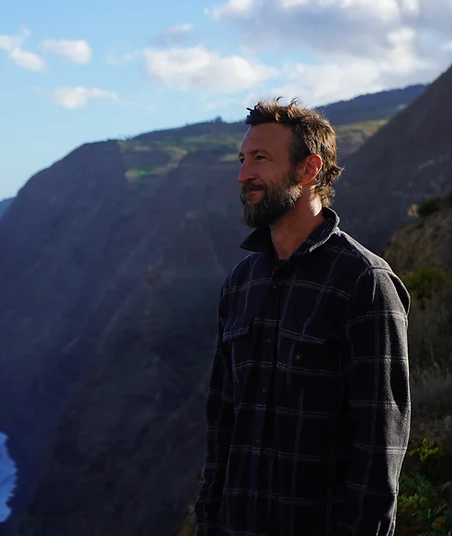
Jonah Jensen is the founder of Earthways Journeys. His background in trauma work, energy medicine and ancient healing is the well that he draws from to help others. Having graduated from The Colorado School of Energy Studies, The Somatic Experiencing Trauma Institute, and The Southwest Institute of the Healing Arts, as well as direct learning from elders, healers and teachers across the globe, Jonah offers his skill, passion and presence from his connection with the spirit of the natural world. You can find more about Jonah and his work on his website or on Instagram.
Kids Mindfulness Expert Lindsay Miller wants to make your life easier. She's spent several decades navigating really hard things like infertility, marital conflict, loss, moving, starting businesses, parenting, and managing a chronic illness just to name a few. Her secret to making it through those experiences with her health and sanity intact is managing her physical, mental and emotional stress levels. She's passionate about sharing practical tools for reducing stress so that you can use your precious energy to live your best life. She firmly believes that when we teach kids how to manage stress we open up so many opportunities for them because we help them live from a place of courage instead of fear. Lindsay has a degree in Child Development, hosts The Stress Nanny Podcast and teaches yoga and mindfulness courses to kids and adults to make regular stress reduction a way of life. You can find out more about Lindsay on her website or on Instagram.
See acast.com/privacy for privacy and opt-out information.
Lindsay Miller 0:21
This is Lindsay, thanks so much for joining me on the podcast. I'm so excited to share this episode with you. I chatted with Jonah Jensen and he has some really great tools and exercises for helping us kind of shift our perspective. He looks at life from like a somatic experiencing standpoint which encompasses way more than just like our mind. But lets us connect with our bodies with nature in really dynamic ways that offer immediate stress relief. One of the things that I loved about talking to him was reorienting toward a beauty and toward a functionality and making decisions from that space, as opposed to making decisions from a space of dysfunction. Listen, and you'll understand a little better what I mean, but it was really fascinating to hear his perspective. This episode is brought to you by the essential calendar, which is a calendar for busy moms, you can sit down for an hour and get organized for three months, keeping everybody on the same page. You can find it at www dot the essential calendar.com. And now on to the episode.
Welcome to The Stress Nanny podcast. I'm your host Lindsay Miller, and I'm so glad you're here to pick up a few resources to help your family stress less. My guest today is Jonah Jensen. He's the founder of Earthways Journeys, which focuses on healing and trauma by working with the land. His nature based healing methods include a focus on somatic experiencing and biodynamic methodology, and his wisdom couldn't be more relevant. Jonah, thank you so much for joining me today.
Jonah Jensen 1:58
Thank you so much for having me. grateful to be here today.
Lindsay Miller 2:04
Talk to us a little bit as we get started about your own story. Because as we are recording this, we're in the thick of a time when children are experiencing trauma at you know, like epic numbers, the rates of, you know, kids needing mental health support the rates of kids experiencing panic and anxiety. I mean, we're hitting, like a tipping point. That's it's really stressful for a lot of families. And this is something that you work with consistently. So help us know kind of how you came to work in this sphere.
Jonah Jensen 2:38
Mm hmm. Yeah, well, yeah. First off, it's just touching to Yeah, to reconnect with how prevalent it is the trauma, reality. And when something that arises for me is, you know, one of the Peter Levine's definition of definitions of traumas, the inability to be with what is, so it's kind of like all of us in a certain way. So it's kind of oriented like a mindfulness approach, how do we really skillfully be with what is together, and especially with the land, but you know, just kind of that being said, the way that I came to kind of develop earthways journeys was through my experience of being in Peter Levine's training at the somatic experiencing trauma Institute, having had almost, you know, 20 plus years experience in the healing arts, the somatic experiencing felt like a kind of a missing piece for me. And when I was in that training, I was living outside in this canyon with a lot of solitude. And I'm a lot of practitioners were using these somatic skills in offices with each other. And I would, I would drive back up this canyon 30 miles up this dirt road and I was doing these practices with the land, when I was realizing that it was sort of waking up my natural soul. And some could say like the indigenous soul that if we go back far enough, that we do belong, we do we are placed and how powerful that is for the nervous system. So my work has become where my enthusiasm is, is is taking people out on the land and tracking for self healing. And for the remembering of the longing for nourishment, and to regulate the autonomic nervous system. You know, when we are out in the land and we're doing somatic experiencing or doing the nature based therapy, that's a really powerful holding field of unconditional love. CO hands. Really organist City is organized. And so when we're in relationship to nature, it's like a giant tuning fork, that sounding healthy frequency, you could say, the reality of it. And then if we learn how to get in contact with that, our system also remembers its health. So how do we do that? So that's where I get excited.
Lindsay Miller 5:28
I love the way you describe that nature as a tuning fork, and how that deep, deep holding, that we receive, whenever we're connected with nature, it can be something that's so healing, and it does, like you said, bring us into a place of resonance.
Jonah Jensen 5:49
Yeah, and I, you know, if you, maybe some listeners can't see me, but I'm doing this with my hand downward. When we get into resonance, we kind of we do literally ground and settle. And then something happens. And, you know, we can get into more of that later. But when our system is starting to know, its own safety in relationship to our relatives that are next to each other, there's a really wide sort of health that can show up and in within that context, is are those places of trauma with these little ones that you're talking about? That will bubbled to the surface on all by itself. And then we can learn how to start to work with those places within us that have a hard time being being with that. So I'm kind of going for it but that's the alchemy. Alchemy is the coherence, its nature, it's each other in respectful proximity, and then it's like, nature will squeeze it out of us, lovingly, kind of help us. Flow.
Lindsay Miller 7:09
Yeah, well, in we use, we see that, right? When we're with safe people, or people who can hold us, right, we see Not, not the same depth that we get with nature, but what you're describing just reminds me of that, like, inherent tendency that we have, when we are in a safe place, for those things that we need to kind of work through, to come up, right, like they just come up. And so it makes sense that in a setting with nature, and then also you know, with someone who is a caring soul aside, you know, beside you, that there is space for some things to come up and be integrated,
Jonah Jensen 7:47
right? Yeah, exactly.
Lindsay Miller 7:51
So talk to me about Peter Levine's work because I am so jealous one that you have been training with him and and to, I'm so grateful that you can bring in that perspective, because his work is something that I'm not sure a lot of listeners are familiar with. So could you just give us a broad overview, I know that's a big task for his work. But overview of somatic experiencing, and like what what Peter Levine's work has kind of brought forth when it comes to dealing with hard things.
Jonah Jensen 8:27
Yeah, I love it and give it a shot. So what arises for me is the human experience, he's really good at kind of like this was the human experience. And he kind of breaks it down, you know, his work sensations, the five senses, our instincts, our emotions, our mind. And then some might add the mythopoetic, or the spiritual dimension. And I won't go any further than that. But as far as you know, Peters work, he's looking at, sort of with the polarity lens, that we have a trauma vortex, and we have a healing vortex. And fancy terms for we have contraction, and we have expansion in our system. And within those context of that multidimensionality of human experience, you sort of realizing that when we can be with our experience, and like in its parts, it's more digestible. And it's easier what I would ask the user to be mindful of, because if it's, you know, if we're not really knowing what we're paying attention to, or what's happening, it's harder to sequence it through which is trauma stored in that. And then things can start to flow through the system with trauma is fixation so We're moving Peters work is about moving from fixation to flow. And how do we do that? Often with trauma, we get fixated on over here. And then so if we, we hold that fixation and presence, but if the charge gets too high out of the window of presence, it's not going to sequence. So it's kind of this artful going in and out of expansion, what's not wrong, the healing vortex and then leaning back into the hard stuff. So it's like, you know, this dance between expansion and contraction. And you learn how to sort of witness that in other. And the art of it is, it's hard to really nail down as the, when those two sort of even out well, I experiences and then the wholeness comes forward, which is biodynamics. And then that takes over, then the doing kind of comes to an end and you're tracking, you're watching the system self heal. It's like magic, really, it is very profound work. That's why it's, you know, across the world. But it's the two expansion contraction and the two working together, not one without the other yin and yang. And then something comes in. And that's the, that's the flow. I have a hard time separating Peters work from John and, and city of Colorado School of energy studies, which is power dynamics, and polarity and all that. But Peter also is a polarity guy. Not a lot of people know that Peter Levine, a lot of his work it's coming from. And then, so how the two are together, and then the system, how it takes over, is totally natural. You know, so it's like, it's not it's fancy words, but it's like, the system is so intelligent and so beautifully design, it's just like, we have to be given an opportunity to self organize, basically. So I love the nature part of it. Because it's just one more, a lot more on, actually, to that process.
Lindsay Miller 12:29
Yeah, that's so beautiful. I am reminded of a little yoga class, I was teaching to kids last week, where we were talking about this idea of expansion and contraction. And so if you're listening now, and you're wanting to connect with that, in your body, walk us through what what expansion feels like, or what it what you know, to you what it feels like, and then maybe what contraction feels like so people can connect with this on a little deeper level on a bodily level.
Jonah Jensen 13:08
Yeah, well, I mean, it's just, it's gonna be what the Word says it, you know, your body goes inward, it will kind of move inwards and whatever the sort of primary sensory cluster so if it's like your shoulder, you might feel a tightening or a squeezing and orient towards your midline could be a contract of experience, like something happened. Right? So, you know, I love what you're saying. Because when we allow the system to do what it's doing with presence, then the Awareness itself, the presence itself is what's cared of. So this approach is like very Yin, it's very like hands off in a way but artful in the sense of Oh yeah, contraction, can I stay with that and then can I track my system in a multi sorted dimensional way? So and then expansion, same way your life is often warmth or spreading or arising, lifting up and out or just pleasure. So same principles are like, leaning into the pleasure leaning into the expansion and then savor so and and shitty and my mentor is like always savoring, because savor is a portal to deeper coherence. So and that was also Peters views like, oriented pleasure, often, the simple, kind, healthy, you know, sunshine, the sound of the leaves, and then what happens in our body, lean there, savor the expansion. And then the trick is, you know, if your with your little ones to bring cure audacity in the sense of discovery and wonder, like, oh, what happens when you really, you know, listen to that stream? What if you close your eyes? And what happens? You have any emotion? Is there a sensation? Where in your body is it? Savor? You can't go wrong with savoring what's not wrong in that moment. And then having an open focus, less things work, open focus awareness, is you kind of include your whole body, and you include your outer body too. So, so much to say, but it's exciting, you can feel the pleasure and it opens your whole system up. And I think we've kind of been conditioned, you know, to be in contraction. Yeah.
Lindsay Miller 15:52
Yeah. And as you and I were talking before, this, again, just the understanding that right now, there are so many kids who are walking around in the state of constant near constant contraction. And that's manifesting in so many ways. And it's causing, like a big disconnect. Because if they're not accessing that sense of expansion, and the contraction isn't balanced by that, then what happens?
Jonah Jensen 16:21
Right, I mean, the, you know, if with a supportive adult might be or with a skilled practitioner, wow, noticing that you're what you're experiencing right now. I'm feeling this like inward pool like and notice you need clenched was that like for you? What, is there any motion or, you know, the more we can support our each other and our little ones with the curiosity and discovery and that it's not so scary, that that we can be sort of a grandfather or grandmother, oak tree. And us as adults can best we can be unmoving in the support of the self organizing other other of the little one. Because our you know, I feel like my job as a, you know, in the healing arts is to be that tree that does moving that's grounded in Oh, wow. What's that? Like? I'm here. So okay, it's safe. So yeah, so what happens when there's contraction? And it's too much? It's that whole world lives in their, in my opinion. So their whole multi dimensional experience is right there. It's all accessible right there. And often, we're waiting for someone to say, Oh, does that and you can cry, it's good to cry, or? Yeah. What's your mind doing right now? It's your emotions. And do what do you need? What is their voice, you know, more and more discovery. But then you know, the skill is you got to be careful, because if you don't kind of know, you could bring him deeper into the contraction, and not know how to bring him out. So I just like a disclaimer, he's like, yeah, it can bring more trauma up. So it's knowing like how to lean back into what's not wrong, in one way is to look out at the environment, you know, find something good to look at, receive. And that's why nature is such a powerful tool for trauma, because the self orienting response of our biology was looking for safety. And this contraction is a memory of something that was hard, something that didn't feel good, something that was unsettling. Something that maybe compromise their sense of safety in the first place. And so orienting to nature is a really cool way to remind the nervous system that it's safe. Because most of time is not a saber toothed Tiger chasing, most of the time. It's pretty loving and easy.
Lindsay Miller 19:25
Yeah, that's so, so wise. And I appreciate you sharing it. I'm especially attuned to this idea you're bringing up about self organizing, and I would love to explore that a little more. Because I think one of the hurdles that we have as parents in those moments when our child is you know, something's coming up for them. And we're sitting with them. And as the parent we want to fix it problem, solve it, make it go away for them, you know, give, give them give them something to help them feel better immediately. And it can be so challenging, right to sit there and just let it emerge without trying to do anything about it. So what you're describing is like a trust, that they have everything, we have everything in us that we need in order to self organized, right in order to come into that place of healing, right. And it's the space that we need in order to make that happen, right. And that's what that's what the other, the adult, the caregiver, the grandparent, the aunt, that's what that's what you're offering, right, like you said, is the safe space for the experience to occur?
Jonah Jensen 20:42
Yeah, and one thing that arises to me on that No, it's good is contact plus space is a really powerful just thinking internally, when you're with your little one, or a friend, or whoever, contact plus space, you're meeting them, they feel you there with them, but you're not invading them. And you're also not abandoning them either. Because often the the trauma is either we've been invaded, or we've been abandoned, or both. So just think, even if you just all you do is just think just drop your awareness down into your belly into your heart, get out of your head and trying to when we want to fix it, we love them. Okay, pause, drop my awareness downward and space within myself. So I'm ground, I'm grounded before I can help them. Then once you find that grounding yourself, you know, you think contact plus space, and then think of them as a multi dimensional fluid being that knows exactly what to do if you give it the right conditions. So it's like a plant with the right container and the right soil and some sunlight, it has all its knee needs met, just to, to flow and become. And if it has the opportunity to feel the sadness, or feel the grief or feel the ecstatic joy that we're afraid of sometimes kids like, it's so big, you don't know how to deal with it. Like, can you do that yourself is a good thing for adults to realize, have I met my own grief? Have I met my own sadness? Or? Or then, you know, Wow, what's that like, to them? And that's really powerful. Because then they'll start teaching, they teach you, you know, as you know, they're always teaching us. And so it's just more of an opportunity for like resonance to between parents and kids. And I have two nieces. So wonderful. Just kind of watch him. And they'll, they'll show you and they'll tell you. And it's a invisible, but very much felt safety and resonance, though, they'll sort of flower for you. And then it's fun, because then that's a transmission for us as the adults. And then if we as adults get good, received that, wow, so much joy there. Or maybe it is the pain, but you know, how is our system relating? And then the self to other dance, you know, they say that healthy nervous system is to go from self awareness to another, and then back. So that's another thing you could practice. You know, can I just know why they're going through that? Can I touch base with myself? Okay, there'll be alright, for a second or two. Okay, what's going on in me? Okay, so what's happening? So that we differentiate from kids and our loved ones. And then the more different differentiation and the more safe distance with the holding their system will continue to, I think self heal.
Lindsay Miller 24:19
Yeah. Oh, I love that so much. It's so powerful. And I think so if we have people listening right now who are like Jonah, I, this sounds great, but I'm so far from being a regulated nervous system that I can't, you know, like, I can't even start to think about how to hold space. Talk to us about how nature can can hold that for us right now. You know, like if you're just trying to figure out how to get grounded in your own body. And that's where you're starting so that you can show up more for your kids so you can help them working through what they're, you know, the stress that kids are burdened with right now. What what is it about going outside It's gonna really like, quadruple your efforts in this regard and make it easier.
Jonah Jensen 25:07
So, one thing is receptivity. So how do we get ourselves in a state where we can actually receive the blessings and of nature? Right directly, which has a direct cause and effect on our autonomic nervous system? How do we do that? Well, instead of going out with our senses, we let it let nature come to you. So it's more of a yin receptive state well, so parents, teachers, aunties, uncles, and grandma, go out into nature. See, feel, close your eyes. So when you go on your walk, and something catches you, whether it's a bird, or you know, splintery, take the time to slow down. And do that practice that, I don't know if I shared the head, heart belly, where you go downward. So one simple practice is just to actually let your awareness be in your head. And then let it ooze down, like, you know, like honey, into your heart, and then your belly, and actually rest of your awareness in your belly. I won't do the whole thing. But you know, this is a practice and just let yourself go downward in space, is resting your belly, and then and then feel how your heart is supported by your belly. And if you have your left hand, you could put it on your heart. And if you have the right hand, you could put it on your belly. And that's just connecting those two centers. And among I think more like natural, like indigenous peoples, they were existing more in the lower centers, it's more receptive, it's more reciprocal, relational, instead of head oriented and objectifying and being on the pake. It's more like go down where it's so that you can receive what's already here. And the way you do that is do head heart, belly, rest in your lower centers. And then with your five senses, let that let it come to you. Close your eyes, track what happens in my system, just now. As the woodpecker flies right across from me and lands in the tree or whatever, see, that's feathers, then you see feel, how do I notice? What's the emotion? What's the sensation? What's the quality, maybe you do a settling, or an expansion, maybe you have a memory from childhood, whatever it is, you kind of learn how to track how the relationship affects you. And I think it's pretty safe to say almost always, it's extremely resourcing and then savor. So when the pleasure comes, savor what's good happening in your body. And then let it inform your system. How you do that is by actually leaving your awareness there, wherever the good feeling is, savor and then kind of asked this question yourself, what happens next? If I saver. And it's exciting, because that's the doorway to the self organizing nature of the human system. That's the biodynamics and, wow, my shoulders just relaxed. Or I just felt all this space open up in my neck, or I had this memory from childhood, on the swing across the pond or whatever, and then let all that dance through you let it let it be a wonder, you know, it's real, it's for real, it's that conversation. And then what can happen as we start to have a felt sense of belonging, and wellness, it can happen pretty fast. Or, and it can bring up all of our trauma too. So we could be out there resourcing with nature, boom, that grief hits. So saying that's more of a, you know, a bit of a contractive. Now, whatever it is, let it wave through you and stay curious. But then keep orienting to outside of, you know, see how, how much support is there. I think what's happening is that we're orienting to each other and both, maybe both people are traumatized.
Lindsay Miller 29:49
Or we're very, very likely right now, right?
Jonah Jensen 29:53
Yeah. We're orienting to an abstract reality. That's sort of mentally created. as well, as often fear based or trauma based or lack of, you know, not enough. Like, gotta get more gotta get and be safe. But what I think you know, nature and the earth offers us is this true felt sense of. It's okay. It's enough, you're enough. I got you. So but it's not mental, you actually start to know that. And then we offer that to our little ones. More and more they feel your safety. Come to you.
Lindsay Miller 30:43
Yeah, that's so beautiful. Thank you for walking us through what that looks like. I'm remembering this tendency that I've just kind of cultivated over the last month or so. And I'm not outside, but it has to do with savoring and how when I climb into the covers at night, when I go to bed, like I'm savoring the feeling of warmth, comfort, you know, and it's so interesting because sometimes I can go to bed and feel like nervous or you know, that whatever emotion is running through, and this practice, you know, it's been really interesting because every, every night when I'm trying to just kind of get out of my head and more into my body to rest and rejuvenate. This is helped me just sink deeper that savoring, you know, like, oh my gosh, I cannot believe how good it feels to be in a comfortable bed. The warmth, you know, with these light blankets over me and I, I can really appreciate the the expansiveness and the safety that can come with savoring those sensations, especially when contraction is so frequent, you know, with with many of us in our day to day lives. And so I'm trying to translate that I mean, into nature, usually, I'm experiencing nature. I mean, I'll sometimes through my feet, right on a hike, but I'm usually seeing it with my eyes, but I love how you brought out, like receiving it instead of kind of going toward it. And I think I do that a lot. And when you said that in the, you know, in that little practice you guided us through, I was like, Oh my gosh, that is a big difference between me just like letting it come to me, as opposed to me feeling like I have to be, you know, just like right there taking it all in. And so I'm excited to explore that more outside, because
Jonah Jensen 32:41
approaching it with reverence to think of that same contact and space that we do with our children or our friends, that we do that with the holy ground of the natural world that, that it's an it's a perfect inter, it's an interface between the spirit world and the physical reality. And it's in spirited, it's alive. Magic. Do we court our walks with reverence, and then watch the launch ourselves be transformed? By the mystery of it, it's, it's like truly, yeah, we become more childlike, we can become more like, wow. The jaw and discovery is a sign of the prefrontal cortex, that curiosity. So you're already starting to get out of the trauma. Vortex when you get when you're in wonder, you're not trauma, right? So nature, so good for that. reverence. Wow, what you know, show me. And then one mantra is, you know, I trust the unerring potency. So the unerring could be, like, I trust my inner physician. I trust that when I go out into nature, and I have an intention, and I'm asking for guidance, and I receive, that my system will receive it and know exactly what to do with. I trust my inner physician, and then you might have an insight or you might know, like, Oh, I know what to do now. But it's coming that good. It's wisdom. From the bottom. It's, it's wisdom from relationship, not from dominance or control over. So really important paradigm shift to think culturally. How we dominate. We want to we want to fix our problems. What if we sit back and let ourselves be informed by the mystery of it, and let that be our how we fix the problem. It's, it's born out of the wholeness. That magic you know, So kids are amazing for that we're kind of focusing. So they come in like that. And they get conditioned out of it. And if you're lucky, they find it again. If you're even luckier, they never lose it, if you can foster that, right?
Lindsay Miller 35:20
Yeah, I agree with you that it's often sadly something that we, we kind of do lose that connection with our lower centers of experiencing and we move ourselves and kids up to our, to our heads so often. One of the things that I'm curious about, too, we talked about this a little bit was, you said, you know, when we connect with nature, and we're in this position of feeling grounded and supported, so abundantly, we can make decisions from a place of coherence, rather than from a place of dysfunction and how, like, as we, as we're setting new year's intentions, as we're setting intentions for, you know, a month or whatever turning point, we're at, that frequently, we're making those intentions from that place of dysfunction. Can you speak to that?
Jonah Jensen 36:18
Yeah. Well, so. So we have these problems we want to fix or we want to change in some way. So this question is like about curiosity of what if we went out and when courted nature or the mystery, God Dao, whatever you want to call it, with, to in order to be guided, or in order to be like, in connection with something greater than ourselves, and then do the somatic work through really receiving the natural world or, or being in contact with our non human relatives, there's a, there's a settling that can happen in a coherence. So often, what was at the forefront of our consciousness when before we went out there like, Okay, I really got I want to do this by next year, or this is my intention, it may completely change. So that's just fun to think about, well, I could go out and just see if I could receive and be curious, and then feel good first, like, go out and like it's a reversal. So feel good first, before you make the intention on how you want to feel good. I mean, we're making intentions How do I want to feel or be better or feel good, but what if you start with abundance already, through a direct experience of it, then my my curiosity is, I think it'll be more giving, it might be more bringing in might be more community based, good will be resourced. Then was my intention, if I from a resource place. So that could be a game changer. And if you can't do that, you could go out and say, I'm not getting regulated, you could make an imaginary line in the sand and then say, This is my intention. And then when you cross the line, you go on the walk in nature, and you have the intention to track and to listen in a multi dimensional way and in within the context of your intention, in nature will reveal itself to you. And your inner psyche, will because it is also nature will reveal itself to you and give you breadcrumbs along the way on your walk. And then every now and then let them tension go and just let yourself be kind of moved. Be in the discovery and and then you're in Holy Grail. Once you cross that threshold, you're sort of like ceremonial lysing walk with your intention. And then the guidance will come they'll come in different ways. You know, I've had like, literally wild animals come sit by people's feet while we're sitting. And wow, that's the message, but it might be just the way clouds move. Or you might be drawn to this section of river valley and then all the grief shows up or you never know what it's going to bring. But if you kind of allow it and keep a bead on your intention. You'll get answers. You'll get guidance, go out for a couple hours. And then once you kind of get good at it, then you can kind of come back and stop before you cross the line again, and check in with yourself. Okay, what's different? What did I learn from that? Walk that intention? And then before you cross the threshold, you know, okay, what, before I cross back into the World Service Spirit, what am I going to bring back to the world. And that's like, you know, being on a vision quest and then coming back when sharing your wisdom with the tribe. And so that's fun to do, you could do that once a day. Just I used to do like a, our walk once a day and set an intention, wander around, see what I learn to come into my way. And wow, it's really fruitful. And then bring it back into the world. This is what I'm going to walk with in the world. This is the wisdom I have the share, informed by something greater than me. And to me, it is who we are. Less self selfish.
Lindsay Miller 40:50
Well, and I love the way that you phrased it, because I think I was having a conversation conversation with my sister yesterday about emergence, and how so often in those moments, it's so much more beautiful and wise, and you know, just breathtaking. What emerges, then what maybe you would have problem solved or intended, you know, I mean, I know that's been the case. For me, I'm like,
Jonah Jensen 41:18
Whoa, how boring, right? So boring. So adult. Joking, but and this sort of cool too, because it's like, you know, a lot of sort of a new age is up and out. It's not necessarily embodiment. And this earth based work if, you know, if you're letting it through the somatic work, you're letting it actually inform you into form, literally, you're tracking it in your body, in your experience, and people can feel that, you'll be able to feel that. Oh, he's, you know, he's in there. And I've heard people say that to me, Oh, wow, you're really in there. I'm not up here, Yogi. I've been there in my early 20s. Slowly, I had to go through initiations to kind of bridge Heaven and Earth, actually went through a major illness. I got really sick in Peru. And it was like a total initiation, infection. And before that I had been a yoga you know, a meditator and a yogi and all that. Love it. But I wasn't still in my body, like I thought I was in going through that illness brought the two together more and started working with more. You know, I worked with tribal cultures, the Cinco py, Ecuadorian Amazon, and did a lot of that sort of earth based work. But what's amazing is that we do have tools that are really simple tools, through mindfulness through somatic work, to really you can go really deep, you can enter into the shamanic that shamanic terrain, even through, especially through the SEC, now, talk about it all the time. But if you really want to go deep, it's there. It's all there. It's fun.
Lindsay Miller 43:17
Yeah. Well, and I love what you're saying about struggle being an initiation. And I think that as we're closing, that is something that we can kind of keep within us as we connect with our kids, and they're having these bodily reactions, you know, like panic or rampant anxiety, right, those are and it it is an initiation into the body. Right. And, and I think if we can invite kids to see, to see these experiences in that way, that we empower them with some of these tools that will serve them for their whole lives, and whether we're just coming to them, you know, at 41, or wherever we are, that that we can, we can offer them up and learn alongside them do our best to connect in the ways that we're able to and practice so that we can engage with kids from this place of either like supporting them, so they never lose it or just like, as they're young in those tween years, or teen years, and they're struggling and we're seeing them really manifest signs of stress in the body. Like oh, hey, this is an initiation. This is your body.
Jonah Jensen 44:38
Yeah. Maybe like you know, what, what is that? Like? Right? That's what you could say. Oh, wow. Right. Always bringing curiosity. Always the discovery, you know, the feeling of anxiety could just you know, drop the content. What is it as sensation and wow, it feels like A butterfly out here, whatever out in front of my chest, or maybe it's more intense, maybe it's like a train. But you are the ground you are the oak tree. Curiosity. And when if it gets too much open your eyes. But yeah, totally, it's really amazing skills that it could sequence really quickly actually, you never know, it could be well sudden, like, it shifts into, like, they pop their eyes open and they're there, or some other quality might show up. So it's what was arising for me listening to you was like, It's a never, it's a ever unending flowing river of experience. So if adults could just, you know, if we could get that within ourselves, and with our little ones, that it's going to change, that trust in the change, trust in the expansion and the contraction and the mystery, you know, of that little one that is coming from somewhere bigger, then it is really hard for adults or parents, right? Because it's like ours, but to know that, you know, our Learn from the bigger mystery like my nieces. There, they don't belong to us. You know, show us what you what you belong to, then we both can be informed. And then that's intimacy in the best sense, or, you know, connection, awareness. And, wow, we can share that.
Lindsay Miller 46:49
That deep knowing love it. One more thing, if we're so I'm imagining we have listeners who are in the minivan club, who are, you know, full days, taking care of kids running around taking kids to activities, trying to just like, get life, keep life going. And so in. So give us just one simple practice, like if there's a somebody listening right now who's like, I love this, and I want to do it, and I don't know how to go outside every day, you know, like, what, can I go outside and put my feet on the grass? I mean, it's about to be snowing here. Right. So can I, you know, like, what is the, what is a small way to get started or a way to maintain that connection on days when maybe like, you don't have, you know, 30 minutes to go for a hike or an hour or two hours to be outside even though you would love to that your life isn't structured that way at this point, you know, maybe that changes and the more you cultivate a relationship with Earth, the more you you know, you shift into that deeper connection. But what's what is just like one or two simple things people can do in a full life.
Jonah Jensen 48:05
Yeah, well, funny. You know, time is a funny thing too. As we, as we become more subtle, the, like, time opens up too. So it's interesting. We don't think like we have enough time. But then when we actually get all this more time. But so one tip nose, easy thing could be do you have flowers inside of your house? Do you have a window that you can look at, see a tree, see a plant, any indoor house, plants, flowers, candles, anything that feels good to look at, you can do this practice. So one easy is just if you're that parent, that's just minivan and so much going on, see feel this path. And then orient your attention to something that feels good to look at. And then see receive that image. So I have flowers on the altar, see, receive and just take 10 seconds. What do I notice happens? In my experience? How did those flowers impact me? So just say, you know, allow yourself to be impacted. Allow yourself to receive and be nourished often by little things. Trees fires house plans, the color of your comforter, if you've got a new one, like we've got a new, really bright red, whatever, if it feels good, then there's an opportunity to actually get into coherence. Beauty itself has a self organizing effect. So wild, right. So amazing that actually if we orient to beauty, that settles our nervous system. So yeah, if you have five minutes go actually go outside because that's better and take your shoes off. And even if you don't know how Track. Even if you just stand on the ground, you're already receiving positive effects. But if you listen to this, you'll have some understanding of how to track the feet on the ground, track with your five senses, receive, and then savor what's not wrong. And then get and stay curious. And your system will reveal the organizing nature of your nature.
Lindsay Miller 50:32
so profound, thank you so much. This has been a deep pleasure, connecting with you today.
Jonah Jensen 50:39
Thank you. Thank you. It's a honor to serve in this way. It's exciting to me to know that these tools are here. And yeah, I'm here. Yeah, I want to support. Let's see these these little ones. Yeah, strange time.
Lindsay Miller 51:01
So talk to me about how people can access your work, in addition to just connecting with you via email, and Instagram. I know you do some education as well talk to us about that.
Jonah Jensen 51:12
Yeah, I get really excited about the education part of it. And guess I just want the audience to know that I'm really flexible on on how that might look, you know, I've worked with people weekly. Sometimes, it could be like, where we set up two or three days where I'm like instructing on these practices. So it really can be customizable, I guess, that works to whatever people want. And then I'm also, you know, fairly flexible on, like a sliding scale. So it's kind of like we could create it. And then you know, the education that there actually are ways to, to learn on the fly. Yeah, I get excited about that.
Lindsay Miller 51:59
Yeah, and I know right now, especially here in the US, we're having so many practitioners with really long wait times, you know, and I think that opening our eyes to different avenues of support, especially ones that are very empowering for the individual is so healing. And so like,
Jonah Jensen 52:22
and we're not just mental creatures. Yeah. You know, and some of the older you know, some of the techniques are very mentally oriented. But in somatic work in the mental realm is an aspect of the whole. It's only a part of the whole thing.
Lindsay Miller 52:43
Great, thank you so much. And thank you for the the depth that you bring to this conversation. And then in your work in the world, I'm grateful for your soul wandering around this earth. Thanks.
Jonah Jensen 53:02
I appreciate you.
Lindsay Miller 53:03
I don't know about you. But what struck me the most about this episode was the idea of receiving and allowing, and not needing to feel like we were grasping, you know, all the time. And I think sometimes when we're stressed, either as caregivers, or you know, as kids are kind of like reaching and grasping for things that you know, and help me get better. And I love the idea of sinking back into a place of reception and just receiving the support that is there for us. Speaking of support, I have several things that I am doing right now to offer support to families, because the stress levels that we're facing are no joke. So I started backup, my morning yoga classes, this is all virtual. So it's online 6am. Mountain Time on Tuesdays, you can join for $10 A session, and we're just doing yoga that's more restorative in nature, to help kind of reset the nervous system and keep everything a little bit more mellow. I also have a mindfulness class on Tuesday evenings, from 630, to 730. And we meet weekly to kind of just reset our perspective and to come at life from a place of intention. So we look at kind of what's going on within us our emotions, our mind our body, like what's going on inside. And then we look at kind of the environment and the challenges that we might be facing, you know, outside of us. And then we make intentional choices. So looking at what's going on the inside what's going on the outside, and how we can leverage our strengths and our creativity to make choices that move us in the direction that we want to go. A lot of us are navigating extreme amounts of stress right now. And it's important that we care for ourselves in really intentional ways. I also have my kids mindfulness coaching and that's on a waitlist status right now. So if you want to get your little one on the waitlist for that, please reach out to stress nanny.com and let me know and I'll let you know when I have an opening. And then finally if you enjoyed this Episode I would really appreciate it if you would leave a review on Apple, you can just do the stars, I would love five. Or you can do you know like a written review. But leaving your review helps other people find the podcast and I'm really invested in helping as many families as possible to live with stress resilience, and the podcasts. But also love if you would share this episode with anyone who would appreciate it. Again, families are facing so much stress and the more we can support each other in decreasing stress, the more we're going to live with a little more more tranquility in the world. Thanks again for being here. Take care. Until next time!
Transcribed by https://otter.ai
Jonah Jensen is the founder of Earthways Journeys. His background in trauma work, energy medicine and ancient healing is the well that he draws from to help others. Having graduated from The Colorado School of Energy Studies, The Somatic Experiencing Trauma Institute, and The Southwest Institute of the Healing Arts, as well as direct learning from elders, healers and teachers across the globe, Jonah offers his skill, passion and presence from his connection with the spirit of the natural world.