Learning to Wonder


 Apple Podcasts
 iHeartRadio
 Spotify
 Amazon Music
 Castro
 RSS Feed
 TuneIn
 Podchaser
 Goodpods
 Castbox
 In this episode of the #8 ranked stress podcast, I talk with Barbara Ann Mojica, author and created of the Little Miss History book series. She shares her insights on engaging kids in conversations, making history come alive and parenting in a way that builds wonder and connection. Using experiences she's gleaned from talking with readers around the world, Barbara's books and perspective will open up some great conversations in your home!
Barbara Ann Mojica, M.A. S.A.S., S.D.A is a historian and retired educator. Her education career spans more than forty years serving as a teacher, special educator, principal, and school district administrator. Using the whimsical Little Miss History character to narrate her book series, she makes learning history a fun-filled adventure. Barbara firmly believes, "If you don't know your history, you don't know what you're talking about." You can find more about Barbara's work, Little Miss History as well as links to her book tours, blog and other tips and tricks on her website.
Lindsay Miller is a kids mindfulness coach, mindfulness educator and host of The Stress Nanny Podcast. She is known for her suitcase tricks and playful laugh. When she's not playing catch with her daughter or rollerblading on local trails with her husband, you can find her using her 20+ years of child development study and mindfulness certification to dream up new ways to get kids excited about deep breathing. Having been featured on numerous podcasts, platforms and publications, Lindsay’s words of wisdom are high impact and leave a lasting impression wherever she goes. To download Lindsay’s Mindfulness At Any Age Guide click 5:92c99b91-42a7-4655-ae85-631f15636dd3" target="_blank">here. To rate the podcast click here.
Lindsay Miller 0:07
You're listening to The Stress Nanny podcast, and I'm your host, Lindsay Miller. I'm here to help you keep an eye on your family stress levels. In our fast paced lives, the ability to manage stress has never been more important for kids or adults. When it comes to stress, we have two choices, we can decrease stress or increase our resilience to it. Here on the number eight ranked stress podcast, I interview experts and share insights to help you do both. When you tune in each week, you'll bring your stress levels down and your resilience up so that stress doesn't get in the way of you living your best life. I'm so glad you're here.
Hey there! It's Lindsay. I'm so glad you're here. This week's episode is with Barbara Ann Mojica. And we talk about different ways to engage kids in conversation. One of the ways that she's created to do that is her books, The Little Miss History books, and she highlights different places and invites conversation around the history of that place, the context that that place has currently and the people that have engaged with that place. I love, love, love the way she takes a really broad view when it comes to having conversations with kids and being open to what they say. I think the practice of starting conversations really, really benefits families in a lot of ways, and she's going to explain some of those as we chat. I hope you enjoy the episode.
Welcome to The Stress Nanny podcast. I'm your host Lindsay Miller and I'm so delighted you're here today to enjoy this conversation with my guest Barbara Ann Mojica. She provides tools to inspire and entertain and educate youth. As an author, educator and parent. She recognizes that history is the key to solving today's problems. Tired of being bombarded by social media noise, accept the challenge, be a truth teller. Barbara Ann Mojica has multiple degrees and certifications. She's a historian and retired educator. And her education career spans more than 40 years, she served as a teacher, special educator, principal and school district administrator. She's written some fantastic books, which we're going to talk about. And she uses the whimsical Little Miss History character to narrate her book series to make learning a history and fun learning history of fun filled adventure. Barbara firmly believes if you don't know your history, you don't know what you're talking about. Barbara, thank you so much for joining me today.
Barbara Ann Mojica 2:28
Thank you for inviting me. I'm really happy to be here. Yeah,
Lindsay Miller 2:32
I'm looking forward to this conversation. First of all, I love Little Miss history, as I've looked at the books and like, look at some of her adventures. I feel like she's this amazing mix of so many different, you know, book characters that we've seen and that are familiar to us that she just kind of automatically draws you in. Tell us a little bit how you came up with the concept and how you started writing these books.
Barbara Ann Mojica 2:58
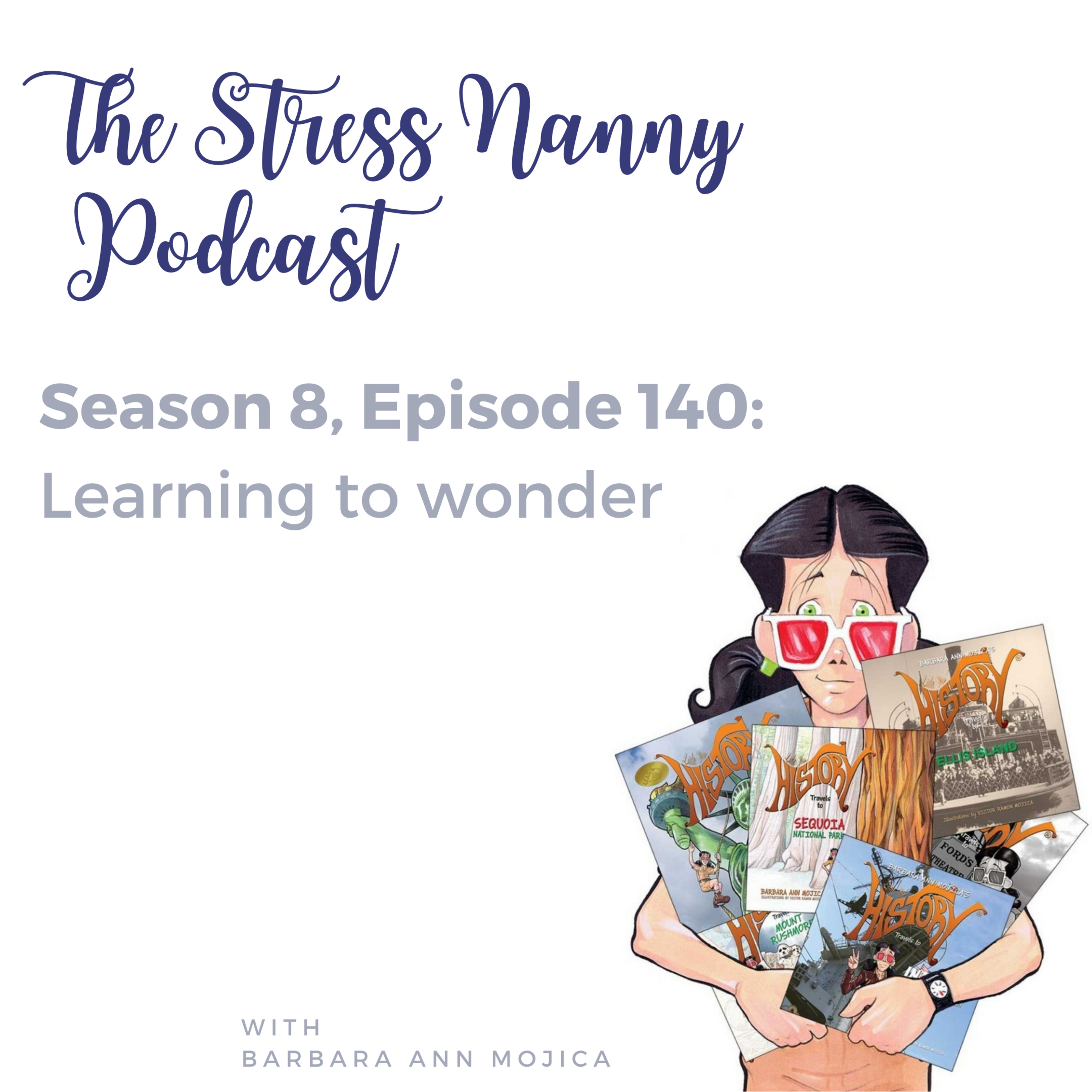
Okay, well, how I came up with the concept, I really can't take credit for coming up with the concept. I wanted to create a series of books that were entertaining, that were inspiring that or creative and interactive. And when I retired from my long career in teaching, I found out within a couple of days that sitting around and gardening and watching the birds and the trees was not going to be my thing. So I said, my want to combine my loves, which are history and working with kids. And I want to do something with it. So my husband came up with the character. You know, he knew that I wanted to make it entertaining, inspiring. Drawing kids in so my husband is an artist, and he has been drawing his entire life. He has worked as a designer in many different areas. And he has published some books of his own and work with some major publishers. He said Why don't I create a character for you? So he created Little Miss history. But Little Miss history isn't a character that just popped into his head. She is a composite of a younger version of me. So Little Miss history looks a little bit like I did when I was a teenager. I used to wear the long pigtails and I had dark hair. I love to travel and I didn't get my You have an opportunity to do that as a child because I was born into a family, which was upper lower class, we didn't have a lot of extra money. We didn't have a car. So I didn't get to go much out of my local area. I wanted to travel, I had this desire to learn about people that went to all of these wonderful foreign strange places. And I wanted to find out how people lived and what they ate and what they did. So I always had that love of travel. So as soon as I got old enough, I went out and I explored and traveled so Little Miss history with this kind of camping hiking outfit. And she's a hiker like I was, I used to hike all around the mountain ranges in New York, and the local areas nearby. And she has these huge rose colored glasses. And that reflects an optimistic outlook, because I always try to look on the brighter side of things. So that's where the rose colored glasses come from. And then she has these giant boots on, which looked like hiking boots, but they're really in memory of my father's huge feet. And so there is little miss history. And that's how she came to be. But she, you're she does kind of look like a lot of different types of characters that children might have been exposed to previously in literature. And I think kids can kind of see a bit of themselves in her. So that's how she came to be. And the series itself was born that way. Now, I use different types of things in my series. They're not totally history, and a little miss history is an explorer. And she visits people and places that sometimes are from the past, sometimes they still exist. Sometimes they're involved in many different disciplines. So I use places like iconic sites, Statue of Liberty, Mount Rushmore, I use nature, I use national parks like Sequoia National Parks, we talk about the science of the the trees and how they grow and the geology of the park. I use international sites like the North Pole. Now the North Pole sits in internation international waters and eight nations claim various parts of the Arctic region. So we talk about the eight nations, we talk about the explorers who went there, we talk about the steep climate, we talk about the animals, we talk about how the whole story of Santa Claus began began and how he's the most famous resident of the North Pole. And we talk about literature and myth and what to kids think about all of these things. So the books are very interactive. They cover everything from prehistory. And some of them covered places that are, of course, still existing and functioning today. And my aim is to get children to become active citizens, of their community and of the larger world, outside of their community, and to become real critical thinkers who want to understand not what happened because history is just not not a series of dates and events. But it is something that is alive. And the moment we are born, we become characters in history. We become part of the story history is not static. It's evolutionary. It started before we were born. It's happening right now and it's going to continue to happen after we're gone. So we become a part of this process. We are all history makers, and real history is not just about the most famous As people in the most famous events, it's about real people just like us, who get up in the morning, who eat breakfast, who go out and learn some kind of skill and, and learn how to interact with people, in our family, in our community, in the larger world. So we need to become critical thinkers, we need to become a, an active part of all areas, our family, our community, our larger world. And that's, that's pretty much my aim. Yeah,
Lindsay Miller 10:44
I love that. And I, I think that the thing that drew me to the character initially was like that sense of curiosity that she had, and also that context. So one of the things I talk about with mindfulness is like that, it's knowing what's going on inside of you, knowing what's going on outside of you and making a choice on purpose. Sometimes it can be really hard to know what's going on outside of you, like what contexts are you a part of right now what you know, like, what are the influences and the things that are that are part of this moment. And I love this, this character and these books that you've written for a lot of reasons, but in part because you explore so many different contexts. And you illustrated that in your, you know, in your intro right there, where you were talking about, like, when we're in the sequoias, we're looking at who was here before how old these trees are, how long they've been here, what, you know, like, what, what our interaction with it is today, and all the different ways that like, context kind of like ripples out. And when we can think critically about those contexts and see history, I love how you said it as something that's evolving and ongoing, that that we're an active part of right now. It comes alive in a way that makes it more exciting, right, and it makes it really, really applicable to our current circumstances where sometimes kids, I think, can have a hard time connecting with, like a felt sense of a place, if they don't have a tethered to it. And in all these stories, little miss history invites them very specifically in multiple ways to engage with the place in time, you know, in a way that is appealing to them.
Barbara Ann Mojica 12:20
And I want to know what they think I'm always asking them questions. So you know, what do they think about the pollution in Sequoia National Park? What what do they think about people in history who were sometimes forgotten, like Alonso Swan, who was one of the gunners on the intrepid during World War Two, and who heroically helped save the ship. And he was, at that time, he was part of a segregated African American unit. And he and these, these other gunners in his unit, fight, only five of which survived, helped save the ship, and he was awarded a Bronze Star. But he felt that his his group deserved more than that, and he fought for it. And 50 years later, he was awarded the Naval Cross. So um, you know, we talk about things like that, we say that, you know, history isn't perfect. The people who write history are human. They make errors and they make mistakes, we learn from some of the mistakes in history, we can always use the past as a framework for going forward and working better in the future. So I want children to understand, to understand that, you know, not to necessarily want to, to assign blame to someone, but to be open minded to see that there are multiple perspectives. We can't judge history by today's standards. That's another mistake that a lot of people make, because when historians look at something, they look at the content or a topic that they wanted to talk about, and they have to go back to the primary sources. What were the real sources of information, the facts, okay, the letters, the journals, the artifacts that have actually remained from that time, not the secondary opinion pieces, and so much of what we hear today, in journalism in the news, you know, in social media, is based on opinion, or it's based on insufficient research. So, you know, children are used to go into the internet If they have a question, and they type in their question, and they look on the internet, they Google it. And the first answer that they find, oh, that's why, okay, they don't look at multiple perspectives. And it's all of a sudden, oh, that's the answer. And then oh, well, I talked to my friend, and my friend agrees with me. So we both think this. So well, that must be true. And you know, how much social media can color what we would talk about what we learn about because sometimes we're getting that one sided view. And then, of course, we don't have the full picture. And the way we communicate today, of course, is so different from the way people communicated in the past. They didn't have the benefit of instant communication, like we do, the benefits, and sometimes the harmful effects of instant communication. So we always have to look at the context, the connections, what else was going on, at that time that was affecting the outcome of things and who else was influencing what was going on? There are, you know, a multitude of factors that have to be considered. And we don't take the time to do that. And that's why I talk so much about critical thinking. Because I feel that one of the things schools are failing to do today is teaching children. How to think the process of thinking not the what, what do they need to learn? You know, every everything is tied up to the meeting the standards, and no, this is what we must learn, and then we're going to be tested on it. And that by this arbitrary standard, we're going to determine whether you have learned this or not, well, you might have learned some arbitrary information. But do you know how to interpret that information, you know, do you know, the process of thinking and critical thinking, being able to focus on a problem being able to analyze what's going on being able to infer connections and conclusions, that's so important in any aspect of life. So no matter what type of career a child ultimately decides to pursue, that child is going to no need to know how to do critical thinking. And I think our schools are really failing in that regard today. As witnessed in the you know, this, the State of the United States, education now, has not improved, in fact, it's declined, we fall into like, below 20, worldwide. Now, and we used to be at the very top, so all of all of our efforts to, you know, create this common base of knowledge that everyone will know and understand and be able to share has not really improved the status of education, in my opinion, and and I think that's borne out by by the data and the facts.
Lindsay Miller 18:40
So then if you if kids are not being encouraged or supported in the process of critical thinking, and I'm reminded of a conversation I had with one of my daughter's teachers several years ago. And she said to me, she sure does ask a lot of questions. And I was like, Well, isn't that why she's here? I mean, I'm pretty sure that's what we're looking for. Right? And she was like, Well, I have so much material to get through. And there's just so many kids in here. And, you know, and I can appreciate that, you know, her perspective. But I, we switched schools shortly thereafter, because I was like, you needed to know I've invested in the curiosity of this child for way too many years, to have it stamped out, you know, in an educational setting. I'm like, that's the whole point of education. So what do you feel like parents can do to strengthen kids education, like if, if they're seeing a gap, and they're seeing like a lack of curiosity, they're seeing a lack of critical thinking, and they're seeing kids kind of like, start to numb out about learning, what are some ways they can kind of like that fire again, and I love that your books do that. And so you know, by asking the questions by highlighting different aspects of history, and the modern world that kids may not know know about but what can parents do?
Barbara Ann Mojica 20:02
Well, I think you hit it on the head when you said curiosity, because that's, I think, key, encouraging a child's curiosity, because even though my parents were not highly educated, they always encouraged my curiosity. And they kind of gave up. I mean, I was always asking questions I was always reading, and I was always so into school that, you know, they would, they would be, I had them to the point where, Oh, be quiet, barber stupid car home. Big because they knew, you know, how how intense, you know, I was about school. But developing curiosity by allowing children to pursue different interests and encouraging them. Even if they fail. I mean, failure is such an important part of learning. And some parents are so hesitant about allowing their kids to fail. You know, they don't want the child to try something, if they feel one, I don't think he's good at that. And, you know, maybe he's not going to win the trophies not going to be, you know, on the top team, you have to encourage children to try different things, and to find their own solutions, you know, don't do everything. For them, you know, if something doesn't work, you know, and the child gets upset, we'll say, you know, say, Well, okay, so that didn't work out, can you think of another way, that you might try to do that, instead of just, you know, saying, Oh, forget it, or do something else, you know, get have them, find their own solutions and finish tasks, you know, don't, don't let them get into this trap of the, you know, the multitasking, you know, and if I can't finish this, well, I'll just go on to something else. And, and we're all guilty of that, I mean, myself, you know, I'll be on the computer, and I'm listening to a webinar and, you know, on checking the email in between, you know, it, we're, we've become just so, so stressed out, by the multitude of things we feel we have to finish, I think we have to kind of encourage kids to slow down and enjoy what they're doing. Be presuit, sometimes find solace just in being alone, you know, and just taking some time to think about what's going on outside, you know, taking a walk, just processing nature and what's going on around them and just not to get so caught up in the the every day, schedule a boom, boom, boom, boom, boom, I have to do this. And I think it's real important for parents to teach kids compassion, and kindness. We kids can be so mean to one another. And, you know, parents have to, of course, console a child when a child becomes a victim of of another student in the class being a bully or being mean or unkind to them. But we have to also show them why kids do these things. And sometimes kids have their own problems. And that's why they're acting out and doing these things. So we have to teach them how to have empathy for different viewpoints and to have to have understanding that not everybody is like us, we're all different. We come from families with different cultures, different values, different customs, different perspectives, and we have to learn to be respectful of all that. So with all of that said, a parent should always try to be a good example to a child and of course, again, parents are not perfect and and we are going to fail at times and we're going to get upset and angry. And when we do we have to show a child that that's normal, you know, I, you know, I got upset. This was bothering me, you know, explain to them why you became upset, it's not their fault. But we, you know, we're all human. And we, we all have these emotions that sometimes target us. So I think, all in all, a good parent and all parents tried to be good, and they come from a multitude of backgrounds, and they have so many different approaches to parenting, there's no handbook for parenting, we all have to, you know, learn by doing. And that's, that's something again, that, that has to be respected. But with all of that said, I think the best way to be a parent is to try to be a mentor and a coach for a child to try to not be this overbearing symbol of authority to, to understand that you're going on this journey with your child, you know, they're growing, and you're growing at the same time, that this is something that you're doing together. And I think these kinds of creative life skills that we were talking about, you know, developing curiosity and finding solutions, and compassion and empathy and, and having a certain boldness to go out and try to, to be determined to do things, sometimes we'll be successful, sometimes we'll fail. I think all of these things are important, but I think there were, there were two magic words that a parent can use to get a child thinking, I always like to talk about using the words, I wonder, if you get a child outside your home, and you're walking around, have them notice what's going on around, you know, you see an old building, you know, say to the child, I wonder what happened in that building? I wonder who lived there? I wonder what they look like, I wonder if they dressed? Same as I did? You know, I wonder if they went to same kind of school that I did I wonder how they communicated with their friends, they didn't have the internet? So how did they communicate? What what was going on there? So if you just take a child out and and have them wander, had them wonder about the family, you know, do a family tree have had have them get interested in talking to different members of the family and asking them about their experiences? And what what, you know, what was going on in their lives? How is their lives different? How will how will they the same, you know, just involving them and taking them and exposing them to different things. As a parent goes to a meeting in the community, take the child to the meeting with you. I mean, let them understand the different problems that arise in a community and how people have to get together and solve them. You can even for children that are a little bit old are encouraged them to express their opinion, write a letter C, they go to the park and they see the swings and broken. Oh, well. What do you think we can do about that? Who is in charge of that? Maybe we should write to them and tell them that there's a problem here and what can they do to solve it? Now all of these are little things, but they are very easy ways to have a child become a much more critically thinking individual who will be later prepared to become an active citizen and someone who is going to be able to become a leader in the future. Yeah, yeah, there
Lindsay Miller 29:50
were so many great points you made there. Thank you for that I loved especially the idea of wandering. Because I think that that's so key I think there are so many, like invitations to presents with wandering, right? Like, when you're immersed in a question like that, I wonder how old this building is, or I wonder who used to live here. I wonder what happened in this space, you know, throughout history. There's just like you, you start to kind of just fully engaged, like your senses, right in your mind and your emotions in the process of sorting through those questions. And so I love how, how much it's an invitation to presents, wondering, and then I also really love the way that in your books, like you said, You ask questions, and you create moments of conversation, because I think, so often, as parents, and you touched on this, we have the intention, you know, we want to do our best, we all are trying to do our best with the tools and the resources and experiences that we've been, you know, given in life or sought out. And I think that when we can practice new ways of being, so if we're not used to having, you know, a little bit more tolerance for kids failing, or if we're not used to, you know, not wanting to kind of push to be the best, if that is feels foreign or feels like we're, we're not doing our job as parents, then getting curious about that. And then just exploring questions around that, like, this maybe isn't something that I have done before, you know, what could I do to help myself be more comfortable in the situation, so the individual asking of questions as parents to kind of get to a point where we can be a little bit more open about what life looks like for our kids, or kind of what their experiences, but then from there, just the process of asking questions in our families, and looking at problems or moments from different angles, and like, wondering, you know, like you do so beautifully in the books, what, what do you think about this topic, and then listening, right. And I think that there's so much that can be done in the way of creating a more collaborative developmental experience for our kids, when we learn to listen, and I think your books are such a great avenue to that. Because they automatically you know, that you, you make it so easy for conversations to emerge based on the story. And kids are drawn into the story, because a little bit of history is fantastic and funny and so adventurous. And I think that is they're drawn in, they want to engage in the conversation, they want to answer the questions, explored the different perspectives and opinions, and then that as parents, that gives us an opportunity to listen, you know, like to see the validity to what our child is sharing to understand their perspective a little bit more. And I think that having practice with that, in settings, like with, you know, reading a book together, is such great experience, because it translates into moments later in the day, or it translates it, you know, into bigger, bigger experiences where that just becomes a habit, like we're in the habit of asking questions, we're in the habit of listening to everyone's opinion about something because we recognize that everyone has something to contribute. And so I love the way that not only can you offer that higher level of vision of what parenting can look like, but also you provide a bridge to it by like these smaller experiences people have as they're reading with their kids.
Barbara Ann Mojica 33:26
And reading aloud is just such a wonderful way to develop a strong parental child bond. It's, it's a way to increase vocabulary. It's a way as you said, to take what you're reading, and then bring that out into the larger world. And then, as something that will be a reminder in the back of your head that that will pop up again, when a totally different situation arises and the child will learn to make a new and a different type of connection. Yeah, with that other event.
Lindsay Miller 34:13
Yeah, well, and I can see, you know, because you have so many books, with Little Miss history going around to these places that you would go on vacation, or you would see you know, as part of your tour through Washington, DC, or through New York or through you know, wherever you are these different places that you can see. Just like how reading these books together before you go, or if you're on a road trip, taking it as part of the car and then reading you know, as long as you're driving to the sequoias having those moments of preparation, like you said, so that when you get there you can then explore in person some of these themes that you kind of worked through in your imagination or you know, in figurative, figurative ways beforehand, and then being able to engage more fully once you have rave in that space.
Barbara Ann Mojica 35:01
And that's exactly what a lot of my fans do. I have people that come to me. And I'm so excited because my favorite book festival event is finally going to be back on this spring because it had been canceled for three years. But every year I would have people come to me and oh, what's the new book, and oh, we read this book before we traveled to Mount Rushmore, or oh, we read this book before we went to the Statue of Liberty. And, you know, that's part of my goal, too, I really hope that many, many parents and teachers and children will be able to physically visit and explore maybe not the North Pole. For most of these books, you know, go to the Intrepid Sea, Air and Space Museum, you know, become a part of all of those, those worldwide events, the, you know, World War one space shuttle, the Korean War, the Vietnam War, all of all of which you can see on this one amazing useme. You know, that really makes it so rich and so alive. And again, it adds another dimension, and another layer to the way a child is able to process the information, and then critically think and put it all together.
Lindsay Miller 36:32
Yeah, yeah, like a touchstone. And that's the case so often with kids, right? If they can have a personal experience with the insert, develop a start to develop a framework for the information, when you take them to the place, or when that comes up again, at school, they already have, they already have a framework or framework in place to plug in new information, and they can engage with it, ask different questions, and it's not novel, they're not trying to build the framework, they already have a framework in place that they can then just be like, you know, scaffolding up into something more robust,
Barbara Ann Mojica 37:06
and they're comfortable with it to you know, they're comfortable with the process of doing it.
Lindsay Miller 37:11
Yeah. Well, and one thing I love about this, too, is, I think sometimes it can feel overwhelming, you know, if we're saying that education isn't, isn't developing critical thinkers, or if we're, you know, pointing out some of the flaws, it can feel overwhelming as parents to, to think like, how am I going to make up the gap of that my kid is there every day, right? But I think just like anything else, when we can take a mindful approach, there are so many opportunities to add these types of conversations, right? Whether it is with a trip on a vacation, reading a book together, being outside and wondering, like it's something we can weave in with relative ease, once we start to just shift our mindset to more curiosity, right, asking questions, and then listening. It's not something that's super tough. And something we can do in the car on the way to, you know, soccer practice, it's something we can do. As we're outside taking the dogs for a walk, it's something we can do at any point during the day. And it's just a matter of prioritizing it and giving it some space, you know, a couple times a week at least.
Barbara Ann Mojica 38:15
And after a while, it becomes a habit like anything else, big jumps, just a part of your thinking process. And, again, that gets reinforced every time you do it. And the same thing with the child. It keeps getting reinforced and stronger and stronger. Yeah. Yeah. Yeah. Well,
Lindsay Miller 38:39
this has been such a fun conversation, the time has gone quickly. tell our listeners where they can find out more about littleness, history. And again, I feel like, I don't want to, I want to leave your work in its own beautiful space. But as I was reading, you know, I was thinking of the Little Miss books from when I was little. And then I was thinking of like, the magic school bus. And then I was anyway, just she's just such like, she remarked, her personality and her mannerisms and like her adventures remind me of so many like, beloved characters, that I really just want to reiterate that she's going to feel familiar to you in so many ways, as you kind of, you know, pick up pick up her story in any of these books that Barbara mentions, but go ahead, where can people find you?
Barbara Ann Mojica 39:23
Well, the best place to go is my website, which is simply Little Miss history.com. And from my website, you can get to any of my other resources because the books are a big part of what I do, but I do so many other things. In addition, I have a blog, and on my blog twice a week, I review family friendly books for all ages from baby through young adults. And I give book recommendations. So I have booked tours on there. I do tips and tricks for parents and for teachers and for authors things like you know how to create a Memory Box, for your family. For authors, different tips on what I've learned in the process of writing for parents, you know how to choose to just write reading books, things like that. I have a YouTube channel, which during COVID, I became really, really active with that, and I'm still doing it. So on my YouTube channel, I have videos for kids, kids telling about history. I have videos on national parks, I have videos, on interviews and podcasts. And I have my two minute teacher series. I do mini lessons, I call it the two minute teacher and they're just supplementary lessons for parents or teachers to use. They're not just on history, they're on everything that's science, citizenship, facts and opinions, you know, a myriad of things. And I do those every week or two minute teacher lesson, plus fun things like trivia, quizzes, and so on. So my youtube channel was very active. And then my social media channels are on there as well, my Twitter, my Instagram, my Facebook page, I have a little mystery page as well. So I have on that website buttons that you can click on to get to any of those things, the YouTube, the blog, the book reviews, you tells you where to get the books about the books, they're available, worldwide. And that's, that's the best link and there's an instant chat on there. If anybody wants to chat and send me an instant email, or they want to write and email me directly. I'm always willing to help and in any way that I can.
Lindsay Miller 42:10
Thank you. Thank you again for being here. It's been such a fun conversation. I appreciate your time today.
Barbara Ann Mojica 42:16
Oh, thank you, I enjoyed having the opportunity to talk with your listeners.
Lindsay Miller 42:21
Well, what did you think one of my favorite things that we talked about was that idea of wandering, and how just getting curious about our world opens us up to a lot of different ways of understanding what's going on around us, as well as taking us from a place of being afraid of things we don't recognize or understand or, you know, haven't experienced before, into a place of curiosity, which in our brain is a really powerful shift to make. So the more we can practice that shift from fear to curiosity, in moments that are low stakes, the more we can use it in moments that are high stakes. And so that practice, you know, just in everyday ways really resonates with me. Thanks again, for listening.
You've just finished an episode of The Stress Nanny podcast. So hopefully you feel a little more empowered when it comes to dealing with stress. Feel free to take a deep breath and let it out slowly as you go back to your day. I'm so glad you're here. If you're a longtime listener, thank you so much for your support. It really means the world to me. If you're new, I'd love to have you follow the podcast and join me each week. And no matter how long you've been listening, please share this episode with someone who is stressed out. If you enjoyed the show, would you please do me a favor and go to ratethispodcast.com/thestressnanny and leave a review. The link is in the show notes. I'm so grateful for all my listeners. Thank you again for being here. Until next time!
Transcribed by https://otter.ai